Word Explanation
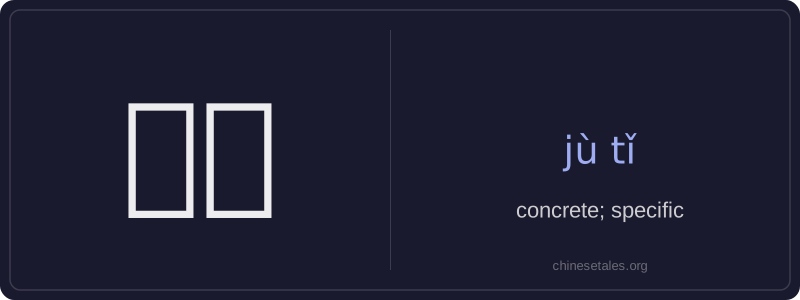
具体 (jùtǐ) is an adjective meaning 'concrete' or 'specific', describing something that is clearly defined, detailed, and not vague or abstract. The character 具 means 'to have' or 'to possess', often implying completeness or actuality; 体 means 'body' or 'substance', suggesting tangible reality. Together, they convey the idea of something having real, perceptible form or definite content — as opposed to abstract, general, or theoretical concepts.
This word is widely used in academic, professional, and everyday contexts when requesting or providing clarity: for example, asking for specific examples ('Can you be more specific?'), describing practical plans ('a concrete implementation plan'), or contrasting with 抽象 (chōuxiàng, 'abstract'). It commonly modifies nouns (e.g., 具体问题 — 'specific issue') or follows 是 (shì) in predicate constructions (e.g., 这个方案很具体 — 'This plan is very concrete'). It’s neutral in register and appropriate across formal and informal speech.
Example Sentences
Related Words
认同
‘认同’ (tóng rèn) is a verb meaning ‘to ident
面条
‘面条’ (miàn tiáo) literally means ‘flour str
背后
背后 literally means 'back + behind' and functions
认为
‘认为’ (rèn wéi) is a transitive verb meaning
不对
不对 (bù duì) literally combines 不 (bù), meani
中学
'Zhōngxué' literally combines 'zhōng' (middle)
见面
见面 literally means 'see face' — combining 见 (t
外语
‘外语’ literally means ‘outside language’ —