Word Explanation
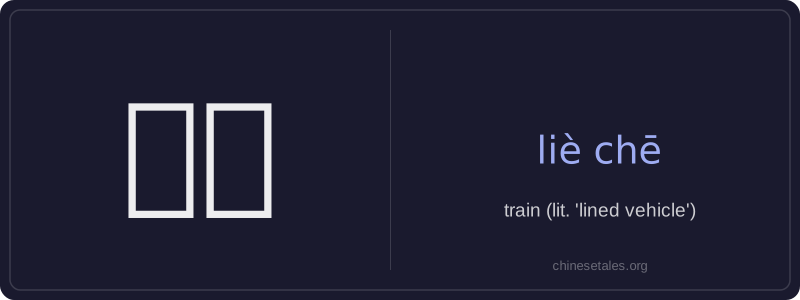
列车 (liè chē) literally means 'lined vehicle'—'列' (liè) suggests order, alignment, or a sequence (as in a line of things), and '车' (chē) means 'vehicle' or 'cart'. Together, they refer to a train: a series of connected carriages moving along rails in an orderly formation. Unlike the more colloquial term 火车 (huǒ chē, 'fire vehicle', historically referencing steam engines), 列车 emphasizes the structured, scheduled nature of rail transport and is widely used in formal, official, and transportation-related contexts.
You’ll encounter 列车 in station announcements, timetables, news reports, and official signage—for example, 高速列车 (gāosù liè chē, 'high-speed train') or 城际列车 (chéngjì liè chē, 'intercity train'). It’s neutral in register and appropriate for both spoken and written Chinese, especially when precision about rail service type or scheduling matters.
Example Sentences
Related Words
认同
‘认同’ (tóng rèn) is a verb meaning ‘to ident
面条
‘面条’ (miàn tiáo) literally means ‘flour str
背后
背后 literally means 'back + behind' and functions
认为
‘认为’ (rèn wéi) is a transitive verb meaning
不对
不对 (bù duì) literally combines 不 (bù), meani
中学
'Zhōngxué' literally combines 'zhōng' (middle)
见面
见面 literally means 'see face' — combining 见 (t
外语
‘外语’ literally means ‘outside language’ —