Word Explanation
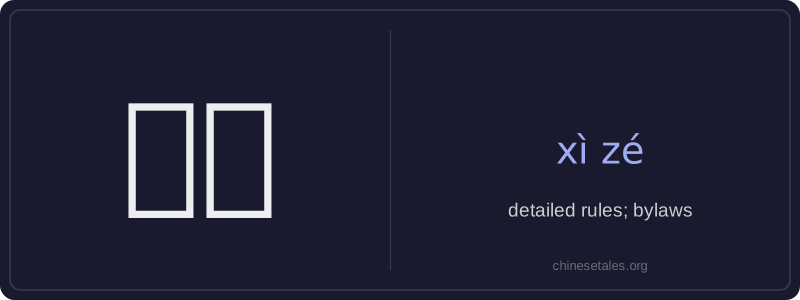
‘细则’ (xì zé) is a compound noun meaning ‘detailed rules’ or ‘bylaws’—specific, operational provisions that elaborate on broader laws, regulations, or policies. The first character 细 (xì) means ‘fine’, ‘detailed’, or ‘minute’, while 则 (zé) means ‘rule’, ‘principle’, or ‘regulation’. Together, they convey the idea of granular, actionable guidelines that clarify how a general rule should be implemented in practice.
This term is commonly used in formal, institutional, or administrative contexts—such as government documents, corporate governance, academic policies, or housing management agreements. It implies authority and binding force, though it ranks below higher-level legislation (e.g., 法律 fǎlǜ or 条例 tiáolì). Unlike informal guidelines, 细则 are typically published, numbered, and legally enforceable within their scope. Learners should note that 细则 is almost always used in written, official registers—not in casual speech—and rarely appears without a preceding noun specifying its domain (e.g., ‘考试细则’ for ‘exam regulations’).
Example Sentences
Related Words
认同
‘认同’ (tóng rèn) is a verb meaning ‘to ident
面条
‘面条’ (miàn tiáo) literally means ‘flour str
背后
背后 literally means 'back + behind' and functions
认为
‘认为’ (rèn wéi) is a transitive verb meaning
不对
不对 (bù duì) literally combines 不 (bù), meani
中学
'Zhōngxué' literally combines 'zhōng' (middle)
见面
见面 literally means 'see face' — combining 见 (t
外语
‘外语’ literally means ‘outside language’ —