Word Explanation
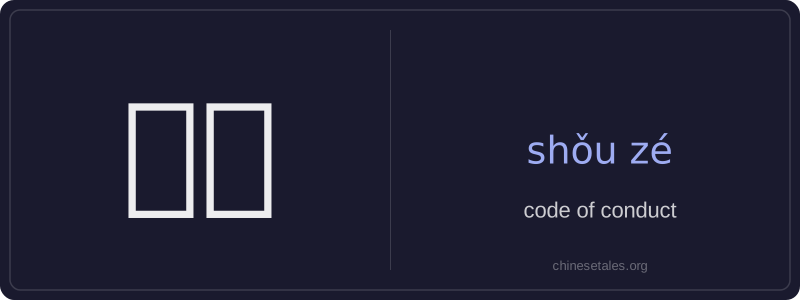
守则 (shǒu zé) literally combines 守 (shǒu), meaning 'to guard' or 'to observe', and 则 (zé), meaning 'rule' or 'principle'. Together, they form a formal noun meaning 'code of conduct' — a set of official or widely accepted behavioral guidelines for a specific group or setting. It implies duty, responsibility, and collective agreement rather than personal preference.
This term is commonly used in institutional contexts: schools publish student守则, hospitals have medical staff守则, and companies issue employee守则. It carries a tone of authority and expectation, often appearing in written documents, posters, or orientation materials. While similar to 'rules' or 'regulations', 守则 emphasizes ethical commitment and shared values over mere compliance — it's less about punishment and more about cultivating proper conduct through mutual understanding and respect.
Example Sentences
Related Words
认同
‘认同’ (tóng rèn) is a verb meaning ‘to ident
面条
‘面条’ (miàn tiáo) literally means ‘flour str
背后
背后 literally means 'back + behind' and functions
认为
‘认为’ (rèn wéi) is a transitive verb meaning
不对
不对 (bù duì) literally combines 不 (bù), meani
中学
'Zhōngxué' literally combines 'zhōng' (middle)
见面
见面 literally means 'see face' — combining 见 (t
外语
‘外语’ literally means ‘outside language’ —