Word Explanation
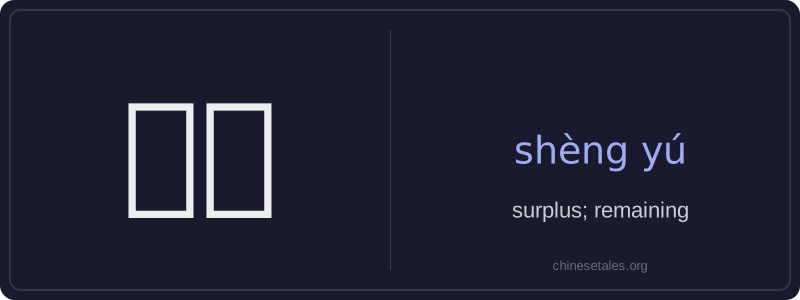
剩余 (shèng yú) means 'surplus' or 'remaining'—the amount left over after use, consumption, or subtraction. It combines 剩 (shèng), meaning 'left over', and 余 (yú), meaning 'remainder' or 'excess'; together they reinforce the idea of what remains. It functions primarily as a noun (e.g., 剩余资金 'surplus funds') but can also act as an adjective before nouns (e.g., 剩余时间 'remaining time').
This word is common in formal and semi-formal contexts: budget reports, project planning, inventory management, and daily scheduling. Unlike colloquial alternatives like 剩下的 (shèng xia de), 剩余 sounds more objective and precise—frequently used in written Chinese, official documents, and spoken explanations requiring clarity about quantities or time. It rarely appears in casual conversation unless discussing logistics or resources.
Example Sentences
Related Words
认同
‘认同’ (tóng rèn) is a verb meaning ‘to ident
面条
‘面条’ (miàn tiáo) literally means ‘flour str
背后
背后 literally means 'back + behind' and functions
认为
‘认为’ (rèn wéi) is a transitive verb meaning
不对
不对 (bù duì) literally combines 不 (bù), meani
中学
'Zhōngxué' literally combines 'zhōng' (middle)
见面
见面 literally means 'see face' — combining 见 (t
外语
‘外语’ literally means ‘outside language’ —