Word Explanation
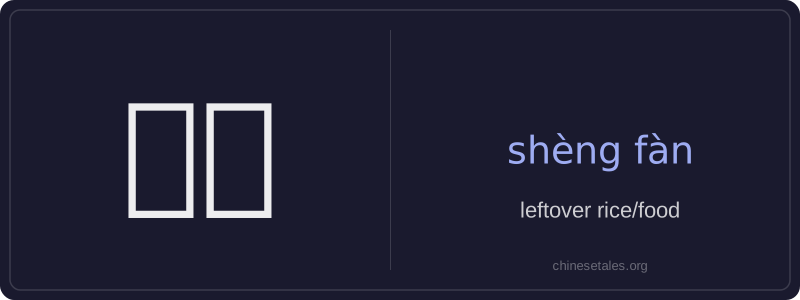
'Shèng fàn' literally means 'remaining rice' — 剩 (shèng) means 'leftover' or 'remaining', and 饭 (fàn) means 'cooked rice' or more broadly 'meal/food'. Though it contains 饭, the term commonly refers to any leftover cooked food — not just rice — especially when stored for later consumption. It’s a neutral, everyday word used in home, restaurant, and kitchen contexts.
In Chinese culture, saving shèng fàn reflects practicality and frugality, but there’s also awareness of food safety: people often reheat it thoroughly or use it creatively (e.g., fried rice). It’s rarely used in formal writing, and almost never for raw ingredients or uncooked food. The compound is fixed — you wouldn’t say *fàn shèng* or substitute other characters without changing meaning entirely.
Example Sentences
Related Words
认同
‘认同’ (tóng rèn) is a verb meaning ‘to ident
面条
‘面条’ (miàn tiáo) literally means ‘flour str
背后
背后 literally means 'back + behind' and functions
认为
‘认为’ (rèn wéi) is a transitive verb meaning
不对
不对 (bù duì) literally combines 不 (bù), meani
中学
'Zhōngxué' literally combines 'zhōng' (middle)
见面
见面 literally means 'see face' — combining 见 (t
外语
‘外语’ literally means ‘outside language’ —