Word Explanation
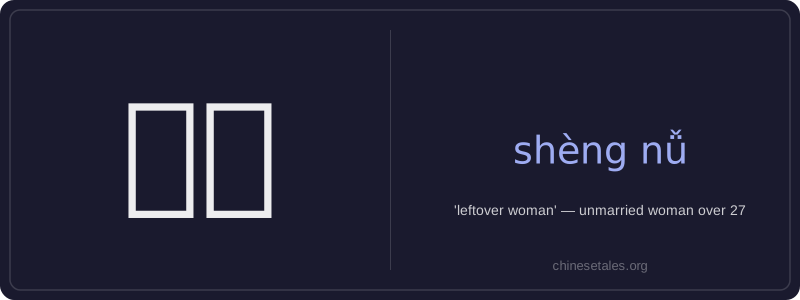
'Shèng nǚ' (literally 'leftover woman') is a socially loaded term in contemporary Chinese that refers to an unmarried urban woman typically aged 27 or older. Though the characters 剩 (shèng) and 女 (nǚ) individually mean 'remaining' and 'woman', their compound carries strong cultural connotations — it reflects societal pressure on women to marry by a certain age, often implying she has 'passed' the socially accepted window for marriage. The term emerged in media and online discourse in the mid-2000s and is widely criticized for its stigmatizing tone.
While sometimes used descriptively or even self-referentially with irony, 'shèng nǚ' is generally considered pejorative and outdated in progressive circles. It contrasts sharply with neutral terms like 'dānshēn nǚxìng' (single woman) and reflects gendered double standards, as no equivalent label exists for unmarried men of the same age. Its usage is now declining in formal contexts but remains common in tabloids, family conversations, and dating app profiles.
Example Sentences
Related Words
认同
‘认同’ (tóng rèn) is a verb meaning ‘to ident
面条
‘面条’ (miàn tiáo) literally means ‘flour str
背后
背后 literally means 'back + behind' and functions
认为
‘认为’ (rèn wéi) is a transitive verb meaning
不对
不对 (bù duì) literally combines 不 (bù), meani
中学
'Zhōngxué' literally combines 'zhōng' (middle)
见面
见面 literally means 'see face' — combining 见 (t
外语
‘外语’ literally means ‘outside language’ —