Word Explanation
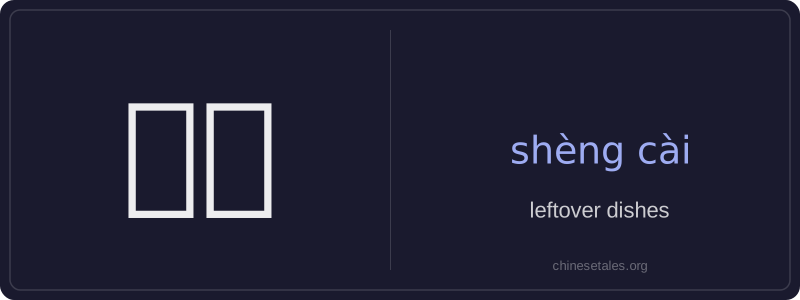
'Shèng cài' literally means 'remaining dishes' — 剩 (shèng) means 'left over, remaining', and 菜 (cài) means 'dish' or 'cooked food'. Together, they refer specifically to cooked food left uneaten after a meal, not raw ingredients or unprepared food. This term is commonly used in home, restaurant, and cafeteria contexts when discussing food storage, reheating, or waste reduction.
Unlike the more general word 'leftovers' in English, 剩菜 carries a slight connotation of practicality or frugality — it’s neutral in tone but often implies intention to reuse or repurpose the food. It’s rarely used for takeout that hasn’t been eaten yet; rather, it refers to food that has already been served and partially consumed. The term is frequently paired with verbs like 'save', 'reheat', 'throw away', or 'cook again' in daily conversation.
Example Sentences
Related Words
认同
‘认同’ (tóng rèn) is a verb meaning ‘to ident
面条
‘面条’ (miàn tiáo) literally means ‘flour str
背后
背后 literally means 'back + behind' and functions
认为
‘认为’ (rèn wéi) is a transitive verb meaning
不对
不对 (bù duì) literally combines 不 (bù), meani
中学
'Zhōngxué' literally combines 'zhōng' (middle)
见面
见面 literally means 'see face' — combining 见 (t
外语
‘外语’ literally means ‘outside language’ —