Word Explanation
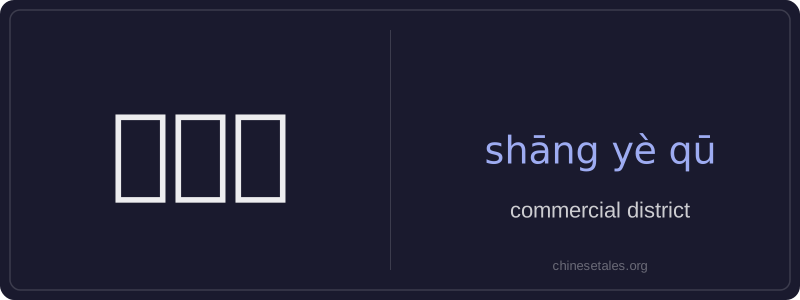
'商业区' (shāng yè qū) literally means 'business industry area' — combining 商 (shāng, 'commerce' or 'trade'), 业 (yè, 'industry' or 'profession'), and 区 (qū, 'district' or 'zone'). Together, it refers to a designated urban area where shops, offices, banks, restaurants, and other commercial establishments are concentrated. It’s the Chinese equivalent of terms like 'downtown core', 'CBD' (central business district), or 'shopping district' in English.
This term is widely used in city planning, real estate, tourism, and daily conversation when referring to bustling urban centers. Commercial districts are often marked by high foot traffic, modern infrastructure, signage in multiple languages, and a mix of local and international brands. While smaller towns may have just one main commercial street, large cities like Shanghai or Guangzhou feature several distinct commercial districts — some historic, others newly developed — each with its own character and function.
Example Sentences
Related Words
认同
‘认同’ (tóng rèn) is a verb meaning ‘to ident
面条
‘面条’ (miàn tiáo) literally means ‘flour str
背后
背后 literally means 'back + behind' and functions
认为
‘认为’ (rèn wéi) is a transitive verb meaning
不对
不对 (bù duì) literally combines 不 (bù), meani
中学
'Zhōngxué' literally combines 'zhōng' (middle)
见面
见面 literally means 'see face' — combining 见 (t
外语
‘外语’ literally means ‘outside language’ —