Word Explanation
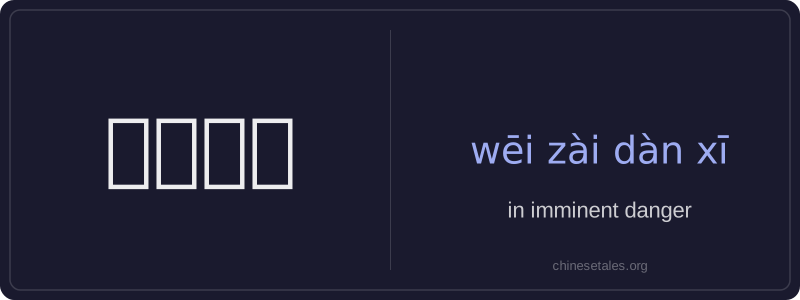
'危在旦夕' is a classical four-character idiom meaning 'in imminent danger'—literally 'danger is at dawn and dusk', implying that peril is so immediate it could strike at any moment, even within a single day. The character 危 means 'danger' or 'peril'; 在 indicates location or state ('is at'); 旦 means 'dawn' or 'morning'; and 夕 means 'evening' or 'dusk'. Together, they evoke the narrow span between sunrise and sunset to stress urgency and gravity.
This idiom is used formally and literarily—common in news reports, medical updates, historical narratives, or serious discussions about crises. It conveys high stakes and time sensitivity, often describing life-threatening situations, collapsing systems, or critical turning points. While grammatically functioning as a noun or adjective phrase, it typically modifies nouns (e.g., '危在旦夕的病人') or serves as a predicate ('情况危在旦夕'). It carries solemn, sometimes somber tone and is rarely used in casual speech.
Example Sentences
Related Words
认同
‘认同’ (tóng rèn) is a verb meaning ‘to ident
面条
‘面条’ (miàn tiáo) literally means ‘flour str
背后
背后 literally means 'back + behind' and functions
认为
‘认为’ (rèn wéi) is a transitive verb meaning
不对
不对 (bù duì) literally combines 不 (bù), meani
中学
'Zhōngxué' literally combines 'zhōng' (middle)
见面
见面 literally means 'see face' — combining 见 (t
外语
‘外语’ literally means ‘outside language’ —