Word Explanation
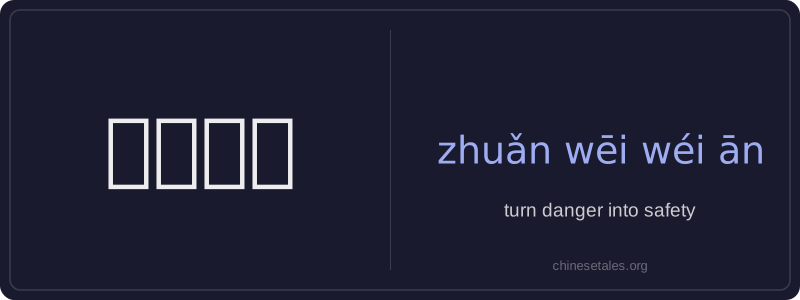
‘转危为安’ is a four-character idiom (chengyu) meaning ‘to turn danger into safety’ — describing a dramatic, often timely reversal from a perilous or critical situation to one of stability and security. Literally, 转 (zhuǎn) means ‘to change’ or ‘to transform’, 危 (wēi) means ‘danger’ or ‘crisis’, 为 (wéi) functions as a verb meaning ‘to become’, and 安 (ān) means ‘safety’, ‘peace’, or ‘stability’. Together, the phrase emphasizes not just survival but a decisive, positive shift in outcome.
This idiom is commonly used in formal or written contexts — especially in news reports, medical summaries, historical narratives, and official statements — to highlight successful intervention or recovery. It conveys relief, gratitude, or admiration for skillful handling of emergencies. While it can describe physical danger (e.g., a patient’s recovery), it’s also applied metaphorically to financial crises, diplomatic standoffs, or technical failures where risk was mitigated.
Example Sentences
Related Words
认同
‘认同’ (tóng rèn) is a verb meaning ‘to ident
面条
‘面条’ (miàn tiáo) literally means ‘flour str
背后
背后 literally means 'back + behind' and functions
认为
‘认为’ (rèn wéi) is a transitive verb meaning
不对
不对 (bù duì) literally combines 不 (bù), meani
中学
'Zhōngxué' literally combines 'zhōng' (middle)
见面
见面 literally means 'see face' — combining 见 (t
外语
‘外语’ literally means ‘outside language’ —