Word Explanation
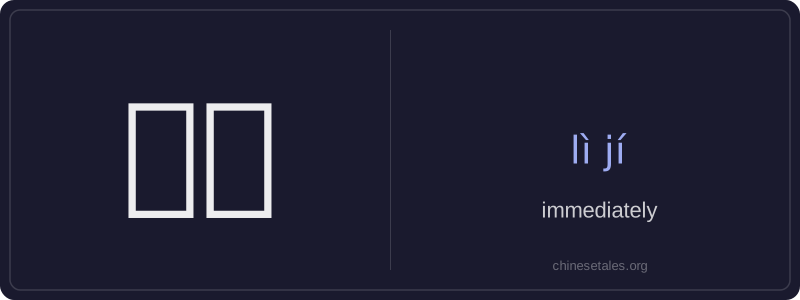
立即 means 'immediately' or 'right away' and functions strictly as an adverb modifying verbs to indicate that an action happens without any delay. The character 立 (lì) literally means 'to stand' but in this compound conveys the sense of 'standing upright — i.e., instantaneously present'; 即 (jí) means 'at once' or 'just now', reinforcing urgency. Together, they form a fixed, unchangeable two-character adverb commonly used in both spoken and written Chinese — especially in formal instructions, warnings, news reports, or polite requests.
This word is stronger and more urgent than similar terms like 马上 (mǎshàng) or 很快 (hěn kuài), and it often implies necessity or obligation — for example, in safety notices or official directives. It typically appears before the verb it modifies and cannot be split, reduplicated, or used attributively (e.g., you cannot say *立即的反应). While common in Standard Mandarin, it sounds slightly formal in casual conversation, where speakers might prefer 马上 or 赶紧.
Example Sentences
Related Words
认同
‘认同’ (tóng rèn) is a verb meaning ‘to ident
面条
‘面条’ (miàn tiáo) literally means ‘flour str
背后
背后 literally means 'back + behind' and functions
认为
‘认为’ (rèn wéi) is a transitive verb meaning
不对
不对 (bù duì) literally combines 不 (bù), meani
中学
'Zhōngxué' literally combines 'zhōng' (middle)
见面
见面 literally means 'see face' — combining 见 (t
外语
‘外语’ literally means ‘outside language’ —