Word Explanation
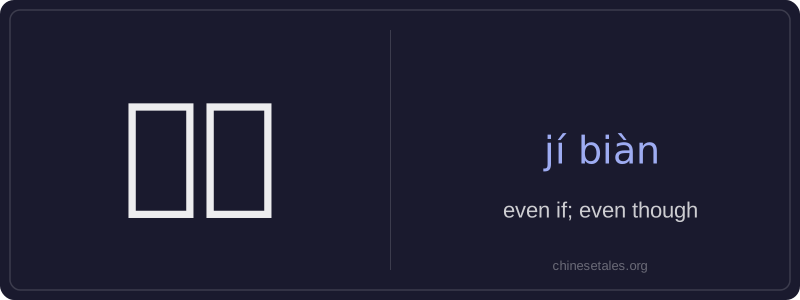
即便 is a conjunction meaning 'even if' or 'even though', used to introduce a concession — that is, a condition or fact that might seem to prevent something from happening, yet the main clause still holds true. The character 即 means 'immediately' or 'just', suggesting immediacy or inevitability, while 便 means 'then' or 'thus', indicating a natural consequence. Together, they form a fixed compound expressing strong contrast and unwavering conditionality.
This word is formal and literary, commonly found in written Chinese, speeches, and thoughtful spoken discourse — less frequent in casual conversation, where even if (even though) is often replaced by simpler structures like 虽然…但是 or 就算. It typically precedes a noun phrase, verb phrase, or clause and must be followed by a main clause expressing the resulting action or state despite the concession.
Example Sentences
Related Words
认同
‘认同’ (tóng rèn) is a verb meaning ‘to ident
面条
‘面条’ (miàn tiáo) literally means ‘flour str
背后
背后 literally means 'back + behind' and functions
认为
‘认为’ (rèn wéi) is a transitive verb meaning
不对
不对 (bù duì) literally combines 不 (bù), meani
中学
'Zhōngxué' literally combines 'zhōng' (middle)
见面
见面 literally means 'see face' — combining 见 (t
外语
‘外语’ literally means ‘outside language’ —