Word Explanation
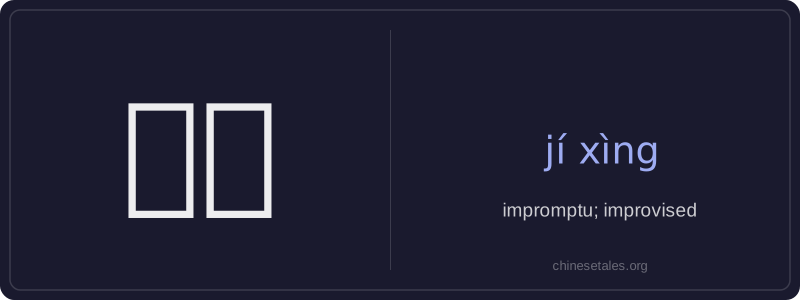
‘即兴’ (jí xìng) describes something created or performed spontaneously, without prior preparation—like an impromptu speech, an improvised musical solo, or a spur-of-the-moment decision. The first character 即 means 'immediately' or 'right at that moment', while 兴 means 'interest', 'excitement', or 'enthusiasm'; together they convey the idea of acting on immediate inspiration or emotional impulse.
This term is commonly used in artistic, social, and everyday contexts: musicians may give a 即兴演奏 (impromptu performance), teachers might ask students for 即兴发言 (an off-the-cuff comment), and friends could decide on a 即兴旅行 (spontaneous trip). It carries a positive, lively connotation—suggesting creativity, flexibility, and authenticity—but is not used for unplanned negative events (e.g., accidents or emergencies).
Example Sentences
Related Words
认同
‘认同’ (tóng rèn) is a verb meaning ‘to ident
面条
‘面条’ (miàn tiáo) literally means ‘flour str
背后
背后 literally means 'back + behind' and functions
认为
‘认为’ (rèn wéi) is a transitive verb meaning
不对
不对 (bù duì) literally combines 不 (bù), meani
中学
'Zhōngxué' literally combines 'zhōng' (middle)
见面
见面 literally means 'see face' — combining 见 (t
外语
‘外语’ literally means ‘outside language’ —