Word Explanation
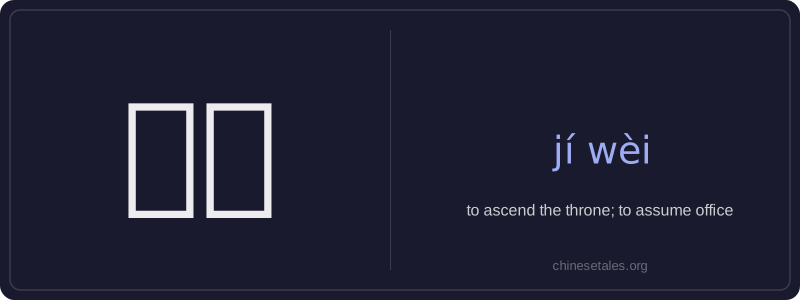
‘即位’ is a formal, literary verb meaning ‘to ascend the throne’ or ‘to assume office,’ especially in reference to emperors, monarchs, or high-ranking officials. The character 即 (jí) means ‘to approach’ or ‘to take up (a position),’ while 位 (wèi) means ‘position,’ ‘rank,’ or ‘throne.’ Together, they convey the act of formally entering and occupying a sovereign or authoritative role. This term carries strong historical and ceremonial connotations and is rarely used for ordinary job appointments.
It appears primarily in historical texts, news reports about royal successions, official announcements, and formal speeches. Because of its elevated register, it is unsuitable for casual contexts—saying 即位 when referring to a new company manager would sound absurdly grandiose. The verb is typically used intransitively and often follows subjects like ‘emperor,’ ‘king,’ or ‘president’ in formal titles.
Example Sentences
Related Words
认同
‘认同’ (tóng rèn) is a verb meaning ‘to ident
面条
‘面条’ (miàn tiáo) literally means ‘flour str
背后
背后 literally means 'back + behind' and functions
认为
‘认为’ (rèn wéi) is a transitive verb meaning
不对
不对 (bù duì) literally combines 不 (bù), meani
中学
'Zhōngxué' literally combines 'zhōng' (middle)
见面
见面 literally means 'see face' — combining 见 (t
外语
‘外语’ literally means ‘outside language’ —