Word Explanation
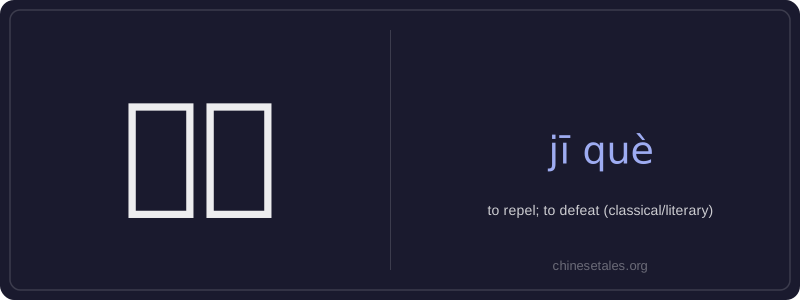
击却 (jī què) is a classical Chinese verb meaning 'to repel', 'to drive back', or 'to defeat'—especially in contexts of military resistance, overcoming obstacles, or thwarting attacks. The character 击 (jī) means 'to strike' or 'to attack', while 却 (què) carries the sense of 'to retreat', 'to withdraw', or 'to reject'. Together, they form a compound implying forceful reversal: striking so as to cause the opponent or threat to fall back or be defeated. This term appears primarily in historical texts, literary prose, formal speeches, and idiomatic expressions—not in everyday spoken Mandarin.
It conveys a decisive, often heroic or strategic, victory rather than mere winning; emphasis lies on pushing back an active threat. You’ll encounter it in descriptions of ancient battles, moral resistance ('repelling corruption'), or metaphorical struggles ('defeating temptation'). Because of its literary register, modern speakers typically use more common alternatives like 击败 (jībài) or 打退 (dǎtuì) in daily speech.
Example Sentences
Related Words
认同
‘认同’ (tóng rèn) is a verb meaning ‘to ident
面条
‘面条’ (miàn tiáo) literally means ‘flour str
背后
背后 literally means 'back + behind' and functions
认为
‘认为’ (rèn wéi) is a transitive verb meaning
不对
不对 (bù duì) literally combines 不 (bù), meani
中学
'Zhōngxué' literally combines 'zhōng' (middle)
见面
见面 literally means 'see face' — combining 见 (t
外语
‘外语’ literally means ‘outside language’ —