Word Explanation
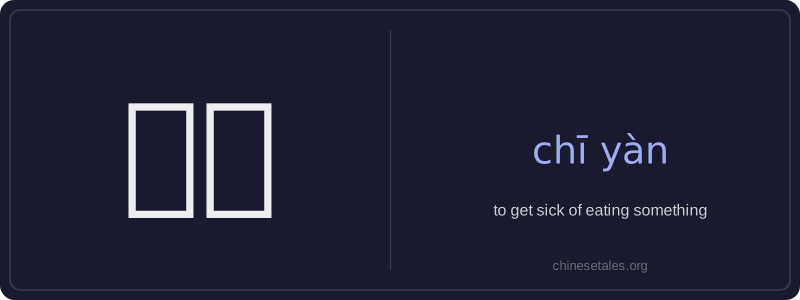
'Chī yàn' literally combines 'chī' (to eat) and 'yàn' (to feel weary or disgusted), expressing the emotional state of becoming tired, bored, or even nauseated by repeatedly eating the same food. It conveys a strong sense of satiety beyond physical fullness — it's about psychological aversion born from overexposure. This phrase is commonly used in everyday speech when describing personal food preferences, family meals, or long-term dietary habits.
The expression typically follows the subject and often appears with an object (e.g., 吃厌了某种菜), though the object may be omitted if contextually clear. It usually carries a slightly informal, conversational tone and implies duration — not just one meal, but repeated exposure over days or weeks. Unlike neutral terms like 'bored', 'chī yàn' specifically signals food-related fatigue and is rarely used metaphorically for non-edible things.
Example Sentences
Related Words
认同
‘认同’ (tóng rèn) is a verb meaning ‘to ident
面条
‘面条’ (miàn tiáo) literally means ‘flour str
背后
背后 literally means 'back + behind' and functions
认为
‘认为’ (rèn wéi) is a transitive verb meaning
不对
不对 (bù duì) literally combines 不 (bù), meani
中学
'Zhōngxué' literally combines 'zhōng' (middle)
见面
见面 literally means 'see face' — combining 见 (t
外语
‘外语’ literally means ‘outside language’ —