Word Explanation
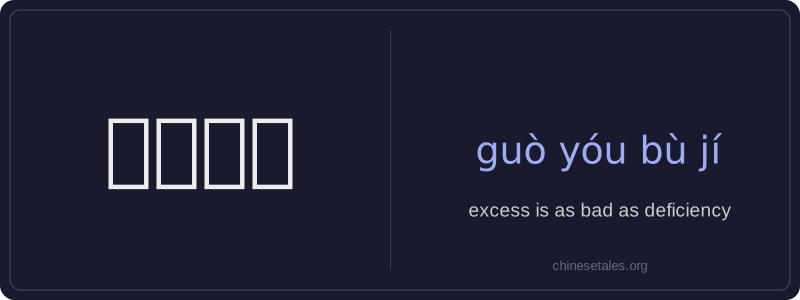
‘过犹不及’ is a classical Chinese idiom originating from the Analects of Confucius, meaning 'excess is as bad as deficiency' — neither too much nor too little is ideal. Literally, 过 (guò) means 'excess' or 'going beyond'; 犹 (yóu) means 'just like' or 'as if'; 不 (bù) is the negation 'not'; and 及 (jí) means 'to reach' or 'to attain'. Together, the phrase conveys that overdoing something is no better than falling short — both fail to hit the proper, balanced middle ground.
This idiom is often used in discussions about moderation in behavior, study, diet, exercise, or emotional expression. It reflects a core Confucian value: the Doctrine of the Mean (中庸 zhōng yōng), emphasizing harmony, appropriateness, and context-sensitive restraint. Native speakers use it in advice-giving, self-reflection, or gentle criticism — especially when someone’s effort, enthusiasm, or reaction is disproportionate to the situation.
Example Sentences
Related Words
认同
‘认同’ (tóng rèn) is a verb meaning ‘to ident
面条
‘面条’ (miàn tiáo) literally means ‘flour str
背后
背后 literally means 'back + behind' and functions
认为
‘认为’ (rèn wéi) is a transitive verb meaning
不对
不对 (bù duì) literally combines 不 (bù), meani
中学
'Zhōngxué' literally combines 'zhōng' (middle)
见面
见面 literally means 'see face' — combining 见 (t
外语
‘外语’ literally means ‘outside language’ —