Word Explanation
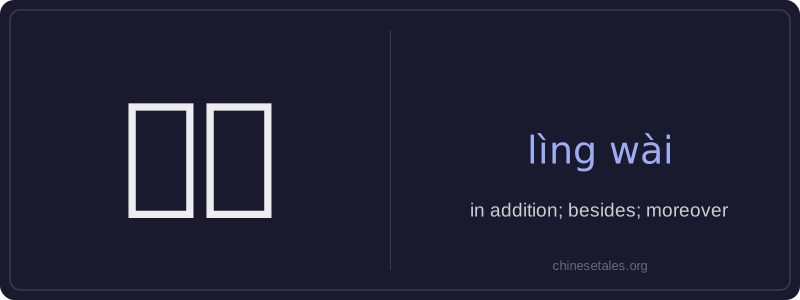
另外 (lìng wài) is an adverbial and conjunctive phrase meaning 'in addition,' 'besides,' or 'moreover.' It consists of two characters: 另 (lìng), meaning 'other' or 'different,' and 外 (wài), meaning 'outside' or 'beyond.' Together, they literally suggest 'outside the original scope' — hence, introducing something additional or supplementary to what has already been mentioned. It typically appears at the beginning of a clause or sentence, often followed by a comma, and is used to add information that is related but distinct from the previous point.
This word is common in both spoken and written Chinese, especially in explanations, lists, comparisons, or when offering extra suggestions or conditions. It carries a neutral, slightly formal tone and works well in everyday conversation as well as in instructions, emails, or presentations. Unlike some conjunctions, 另外 does not require special verb forms or particles after it — it simply introduces a new idea smoothly and logically.
Example Sentences
Related Words
认同
‘认同’ (tóng rèn) is a verb meaning ‘to ident
面条
‘面条’ (miàn tiáo) literally means ‘flour str
背后
背后 literally means 'back + behind' and functions
认为
‘认为’ (rèn wéi) is a transitive verb meaning
不对
不对 (bù duì) literally combines 不 (bù), meani
中学
'Zhōngxué' literally combines 'zhōng' (middle)
见面
见面 literally means 'see face' — combining 见 (t
外语
‘外语’ literally means ‘outside language’ —