Word Explanation
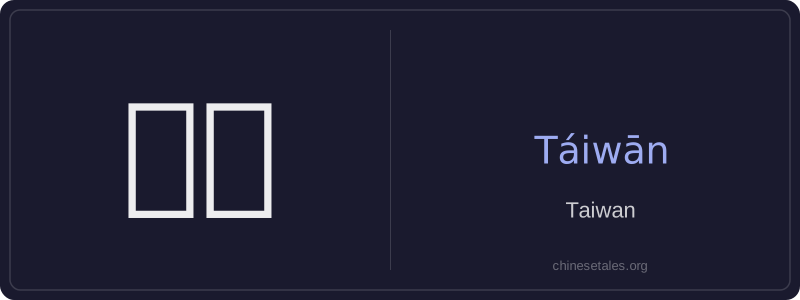
‘Taiwan’ (Táiwān) is the Mandarin name for the island and region located off the southeastern coast of mainland China. The character 台 (Tái) originally refers to a raised platform or terrace, and historically appears in names like Táiběi (Taipei); 湾 (wān) means ‘bay’ or ‘inlet’, reflecting Taiwan’s geography as an island surrounded by bays and ocean. Together, the name evokes the island’s coastal topography and long-standing cultural identity.
Taiwan is commonly used as a proper noun in geographical, political, historical, and cultural contexts — for example, when discussing travel, food, language dialects, or cross-strait relations. It functions grammatically as a singular, uncountable noun and does not take measure words unless specifying administrative units (e.g., 台湾省 ‘Taiwan Province’). While widely recognized internationally, usage may carry nuanced connotations depending on context and speaker intent, especially in formal or diplomatic discourse.
Example Sentences
Related Words
认同
‘认同’ (tóng rèn) is a verb meaning ‘to ident
面条
‘面条’ (miàn tiáo) literally means ‘flour str
背后
背后 literally means 'back + behind' and functions
认为
‘认为’ (rèn wéi) is a transitive verb meaning
不对
不对 (bù duì) literally combines 不 (bù), meani
中学
'Zhōngxué' literally combines 'zhōng' (middle)
见面
见面 literally means 'see face' — combining 见 (t
外语
‘外语’ literally means ‘outside language’ —