Word Explanation
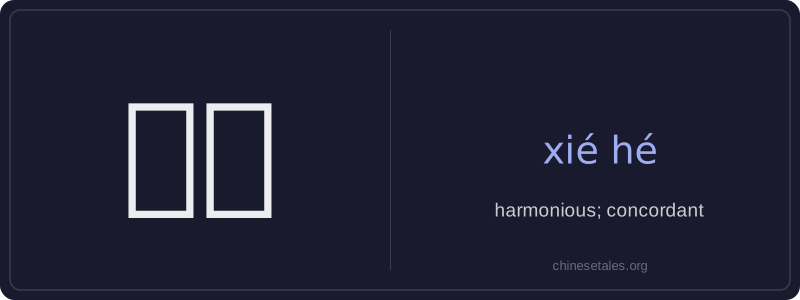
谐和 (xié hé) is an adjective meaning 'harmonious' or 'concordant', describing a state of balanced, pleasant agreement—whether between people, sounds, colors, or ideas. The character 谐 (xié) originally meant 'in tune' or 'in agreement', often used in musical contexts (e.g., 和谐 huòxié, 'harmony'); 和 (hé) reinforces this sense, meaning 'peace', 'harmony', or 'together'. Together, 谐和 emphasizes natural, effortless compatibility—not forced unity, but organic cohesion.
This word appears frequently in formal and literary Chinese, especially when describing interpersonal relationships, artistic composition, or social atmosphere. It carries a warm, positive connotation and is often used to praise balance and mutual respect—such as in family life, team collaboration, or aesthetic design. While similar to 和谐 (héxié), 谐和 feels slightly more refined and descriptive, commonly found in written language and thoughtful speech rather than casual conversation.
Example Sentences
Related Words
认同
‘认同’ (tóng rèn) is a verb meaning ‘to ident
面条
‘面条’ (miàn tiáo) literally means ‘flour str
背后
背后 literally means 'back + behind' and functions
认为
‘认为’ (rèn wéi) is a transitive verb meaning
不对
不对 (bù duì) literally combines 不 (bù), meani
中学
'Zhōngxué' literally combines 'zhōng' (middle)
见面
见面 literally means 'see face' — combining 见 (t
外语
‘外语’ literally means ‘outside language’ —