Word Explanation
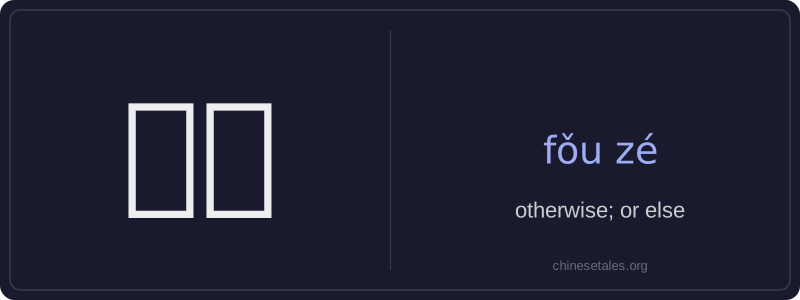
Otherwise is a conjunction used to introduce a negative consequence that will follow if a stated condition is not met. It literally combines 否 (fǒu), meaning 'no' or 'not', and 则 (zé), meaning 'then' or 'in that case' — together forming a compact logical connector equivalent to English 'otherwise' or 'or else'. It typically appears after a warning, instruction, suggestion, or conditional clause, often at the beginning of the second clause in a compound sentence.
This word is common in both spoken and written Chinese, especially in advice, instructions, warnings, and hypothetical reasoning. It carries a slightly formal or serious tone and is frequently used in contexts involving cause-and-effect, risk, or urgency — for example, when urging someone to act promptly to avoid trouble. Unlike the English word 'otherwise', 否则 cannot stand alone as a sentence; it must connect two related clauses, with the first clause presenting the condition and the second stating the undesirable outcome.
Example Sentences
Related Words
认同
‘认同’ (tóng rèn) is a verb meaning ‘to ident
面条
‘面条’ (miàn tiáo) literally means ‘flour str
背后
背后 literally means 'back + behind' and functions
认为
‘认为’ (rèn wéi) is a transitive verb meaning
不对
不对 (bù duì) literally combines 不 (bù), meani
中学
'Zhōngxué' literally combines 'zhōng' (middle)
见面
见面 literally means 'see face' — combining 见 (t
外语
‘外语’ literally means ‘outside language’ —