Word Explanation
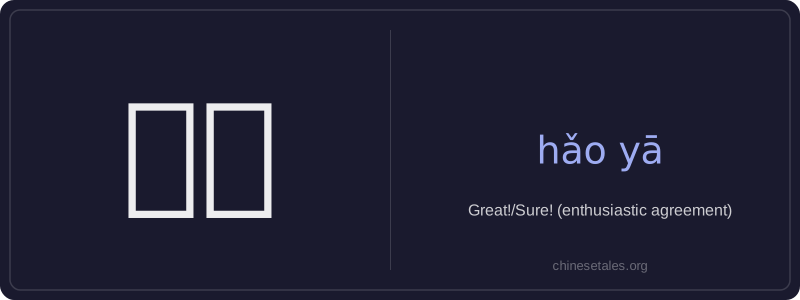
‘好呀’ is an enthusiastic, friendly interjection used to express eager agreement or cheerful acceptance—similar to 'Great!' or 'Sure!' in English. The character 好 means 'good' or 'okay', and 呀 is a sentence-final particle that adds warmth, informality, and emotional emphasis. Together, they transform a simple affirmation into something lively and personable, often conveying excitement, willingness, or playful consent.
This phrase is common in casual spoken Chinese among friends, family, or colleagues of equal status. It’s rarely used in formal writing or serious contexts—it would sound out of place in a business report or official document. Tone and context matter: when said with rising intonation and a smile, it signals genuine enthusiasm; if said flatly or sarcastically, it can imply reluctant agreement (though this is less common). It’s especially frequent in responses to invitations, suggestions, or proposals involving shared activities.
Example Sentences
Related Words
认同
‘认同’ (tóng rèn) is a verb meaning ‘to ident
面条
‘面条’ (miàn tiáo) literally means ‘flour str
背后
背后 literally means 'back + behind' and functions
认为
‘认为’ (rèn wéi) is a transitive verb meaning
不对
不对 (bù duì) literally combines 不 (bù), meani
中学
'Zhōngxué' literally combines 'zhōng' (middle)
见面
见面 literally means 'see face' — combining 见 (t
外语
‘外语’ literally means ‘outside language’ —