Word Explanation
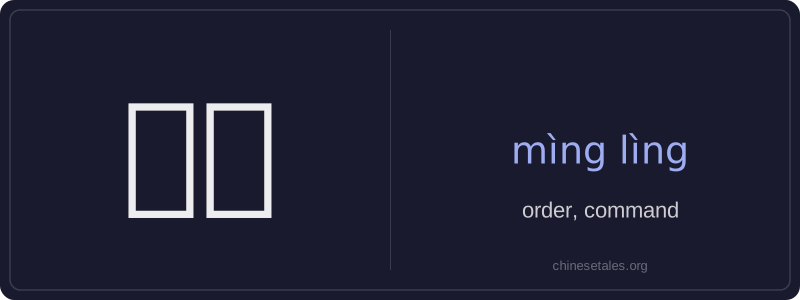
命令 (mìng lìng) means 'order' or 'command' — a formal instruction issued by someone in authority, requiring obedience. The character 命 (mìng) originally meant 'life' or 'destiny', but in compound words often carries connotations of authority and mandate; 令 (lìng) means 'to order' or 'decree'. Together, they form a noun (e.g., obey a command) or verb (e.g., to issue an order), emphasizing official, binding directives — commonly used in military, administrative, computing (e.g., system commands), or training contexts (like giving commands to dogs).
As a noun, 命令 is countable and often preceded by measure words like 一(个) or this/that (这个/那个). As a verb, it takes the structure [Subject] 命令 [Object] [to do something], frequently followed by a clause with (了) or 不. It's neutral in register but sounds more formal or serious than casual alternatives like 叫 (jiào) or 让 (ràng), and is rarely used for peer-to-peer requests.
Example Sentences
Related Words
认同
‘认同’ (tóng rèn) is a verb meaning ‘to ident
面条
‘面条’ (miàn tiáo) literally means ‘flour str
背后
背后 literally means 'back + behind' and functions
认为
‘认为’ (rèn wéi) is a transitive verb meaning
不对
不对 (bù duì) literally combines 不 (bù), meani
中学
'Zhōngxué' literally combines 'zhōng' (middle)
见面
见面 literally means 'see face' — combining 见 (t
外语
‘外语’ literally means ‘outside language’ —