Word Explanation
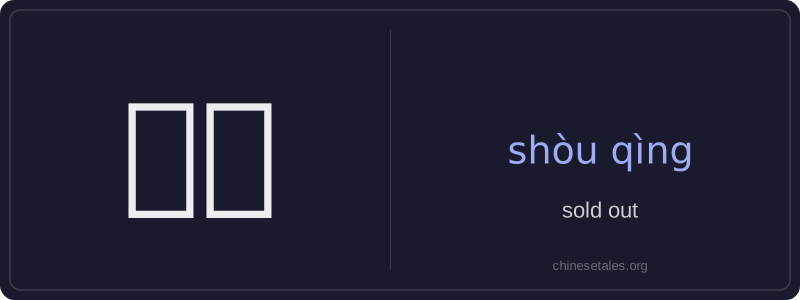
售罄 (shòu qìng) literally combines 售 (shòu), meaning 'to sell', and 罄 (qìng), meaning 'to exhaust' or 'to run out completely'. Together, they form a compound adjective meaning 'sold out' — indicating that every unit of a product or service is no longer available for purchase. It’s commonly used in commercial contexts such as retail, ticketing, e-commerce, and event management.
This word carries a formal, concise tone and appears frequently in announcements, online product pages, and news reports. Unlike the more colloquial 没了 (méi le) or 卖光了 (mài guāng le), 售罄 sounds professional and slightly literary — it’s often seen on official notices or status labels ('库存售罄' / 'stock sold out'). While it can describe physical goods (e.g., concert tickets, limited-edition sneakers), it’s rarely used for abstract or non-commercial concepts like time or emotions.
Example Sentences
Related Words
认同
‘认同’ (tóng rèn) is a verb meaning ‘to ident
面条
‘面条’ (miàn tiáo) literally means ‘flour str
背后
背后 literally means 'back + behind' and functions
认为
‘认为’ (rèn wéi) is a transitive verb meaning
无论谁
‘无论谁’ (wú lùn shéi) is a pronoun meaning
不对
不对 (bù duì) literally combines 不 (bù), meani
中学
'Zhōngxué' literally combines 'zhōng' (middle)
见面
见面 literally means 'see face' — combining 见 (t