Word Explanation
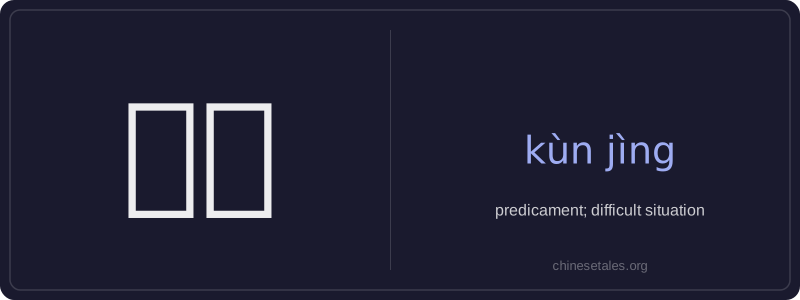
‘困境’ (kùn jìng) is a compound noun meaning ‘predicament’ or ‘difficult situation’ — a circumstance where someone faces serious obstacles, limited options, and feels stuck or unable to proceed easily. The first character 困 (kùn) means ‘to confine,’ ‘to be in difficulty,’ or ‘to feel exhausted,’ while 境 (jìng) means ‘realm,’ ‘sphere,’ or ‘situation.’ Together, they literally evoke the image of being trapped within a narrow, challenging ‘realm’ — not just physical hardship but psychological or social pressure.
This word is formal and neutral in register, commonly used in written Chinese, news reports, academic discussions, and serious conversations. It implies gravity and complexity — not minor inconveniences (like forgetting keys), but significant challenges requiring thoughtful resolution, such as financial strain, ethical dilemmas, or systemic barriers. It often appears with verbs like 面临 (to face), 摆脱 (to escape), or 陷入 (to fall into), and rarely stands alone without context.
Example Sentences
Related Words
背后
背后 literally means 'back + behind' and functions
认同
‘认同’ (tóng rèn) is a verb meaning ‘to ident
面条
‘面条’ (miàn tiáo) literally means ‘flour str
认为
‘认为’ (rèn wéi) is a transitive verb meaning
无论谁
‘无论谁’ (wú lùn shéi) is a pronoun meaning
不对
不对 (bù duì) literally combines 不 (bù), meani
中学
'Zhōngxué' literally combines 'zhōng' (middle)
见面
见面 literally means 'see face' — combining 见 (t