Word Explanation
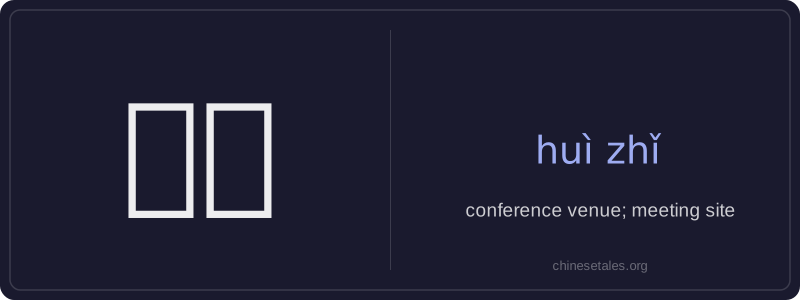
'会址' (huì zhǐ) is a compound noun meaning 'conference venue' or 'meeting site'. It combines two characters: 会 (huì), meaning 'meeting', 'conference', or 'assembly', and 址 (zhǐ), meaning 'site', 'location', or 'address'. Together, they specifically refer to the physical location where an official meeting, conference, or convention is held — not just any gathering place, but one formally designated for organized group activities. The term carries a formal, institutional tone and is commonly used in official documents, event announcements, and news reports.
This word is frequently seen in contexts involving government conferences, academic symposiums, party congresses, or international summits. Unlike more general terms like 地点 (dìdiǎn, 'location') or 场所 (chǎngsuǒ, 'venue'), 会址 emphasizes the functional purpose of the space — hosting structured, often high-level meetings. It rarely appears in casual speech and is almost always paired with modifiers indicating scale or importance, such as '国际会议会址' (international conference venue) or '首届大会会址' (venue of the inaugural congress).
Example Sentences
Related Words
背后
背后 literally means 'back + behind' and functions
认同
‘认同’ (tóng rèn) is a verb meaning ‘to ident
面条
‘面条’ (miàn tiáo) literally means ‘flour str
认为
‘认为’ (rèn wéi) is a transitive verb meaning
无论谁
‘无论谁’ (wú lùn shéi) is a pronoun meaning
不对
不对 (bù duì) literally combines 不 (bù), meani
中学
'Zhōngxué' literally combines 'zhōng' (middle)
见面
见面 literally means 'see face' — combining 见 (t