Word Explanation
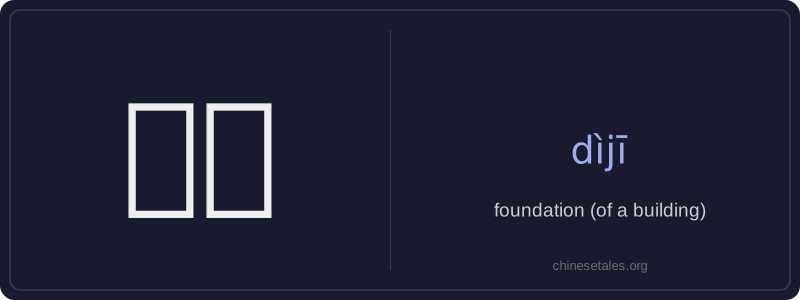
‘地基’ (dìjī) literally means ‘earth foundation’ — ‘地’ (dì) refers to earth or ground, and ‘基’ (jī) means base or foundation. Together, they denote the structural base of a building: the load-bearing layer beneath the structure that transfers weight safely into the soil. It is a technical term used in construction, civil engineering, and urban planning, not for metaphorical or abstract foundations (e.g., ‘foundation of knowledge’ uses ‘基础’, not ‘地基’).
This word appears in contexts involving building safety, earthquake resistance, soil testing, and architectural design. Unlike general-purpose words like ‘基础’, ‘地基’ is strictly physical and architectural — you’ll hear it when discussing excavation depth, concrete pouring, pile driving, or settlement issues. It’s commonly paired with verbs like ‘打’ (to lay), ‘加固’ (to reinforce), or ‘下沉’ (to sink), and often modified by terms indicating type (e.g., ‘桩基’ piling foundation) or condition (e.g., ‘软弱地基’ weak soil foundation).
Example Sentences
Related Words
背后
背后 literally means 'back + behind' and functions
认同
‘认同’ (tóng rèn) is a verb meaning ‘to ident
面条
‘面条’ (miàn tiáo) literally means ‘flour str
认为
‘认为’ (rèn wéi) is a transitive verb meaning
无论谁
‘无论谁’ (wú lùn shéi) is a pronoun meaning
不对
不对 (bù duì) literally combines 不 (bù), meani
中学
'Zhōngxué' literally combines 'zhōng' (middle)
见面
见面 literally means 'see face' — combining 见 (t