Word Explanation
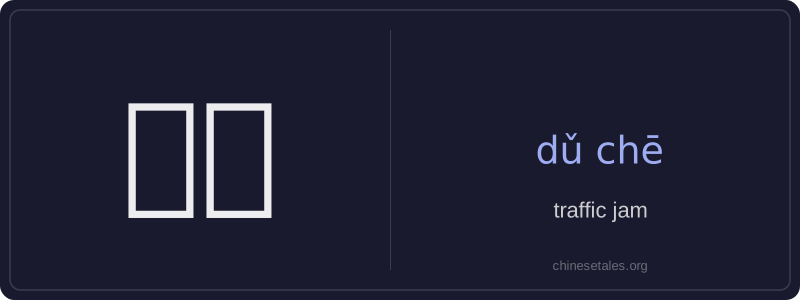
‘堵车’ literally means ‘blocked car’—the character 堵 (dǔ) means ‘to block’ or ‘to obstruct’, and 车 (chē) means ‘vehicle’ or ‘car’. Together, they form a compound noun meaning ‘traffic jam’—a common urban phenomenon where vehicles are stuck or moving extremely slowly due to high volume, accidents, roadwork, or poor traffic management. It’s used exclusively for road vehicle congestion, not for trains, planes, or pedestrians.
This word is neutral in register and appears frequently in daily conversation, news reports, weather/traffic apps, and social media. While it can be used as a noun (e.g., 今天堵车很严重), it may also function adverbially in informal speech (e.g., 我们堵车了 — ‘We’re stuck in traffic’). It’s rarely used in formal writing without modification (e.g., 交通拥堵 is more formal).
Example Sentences
Related Words
背后
背后 literally means 'back + behind' and functions
认同
‘认同’ (tóng rèn) is a verb meaning ‘to ident
中学
'Zhōngxué' literally combines 'zhōng' (middle)
面条
‘面条’ (miàn tiáo) literally means ‘flour str
认为
‘认为’ (rèn wéi) is a transitive verb meaning
无论谁
‘无论谁’ (wú lùn shéi) is a pronoun meaning
不对
不对 (bù duì) literally combines 不 (bù), meani
见面
见面 literally means 'see face' — combining 见 (t