Word Explanation
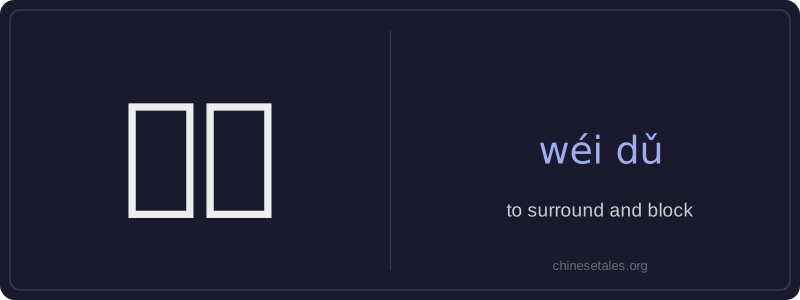
围堵 (wéi dǔ) is a compound verb meaning 'to surround and block' — literally combining 围 (wéi), 'to surround', and 堵 (dǔ), 'to block or obstruct'. Together, they describe coordinated action where people or forces encircle a target from multiple sides while simultaneously cutting off its movement or escape routes. This word emphasizes both spatial containment and functional restriction.
It’s commonly used in contexts involving crowd control, wildlife management, law enforcement operations, or even metaphorical situations like containing misinformation. While it can appear in news reports about protests or animal rescues, it carries a formal, slightly forceful tone and is rarely used in casual daily speech. The term often implies intentionality, planning, and authority — for example, rangers might 围堵 a dangerous wild animal to prevent harm to villagers.
Example Sentences
Related Words
背后
背后 literally means 'back + behind' and functions
认同
‘认同’ (tóng rèn) is a verb meaning ‘to ident
中学
'Zhōngxué' literally combines 'zhōng' (middle)
面条
‘面条’ (miàn tiáo) literally means ‘flour str
认为
‘认为’ (rèn wéi) is a transitive verb meaning
无论谁
‘无论谁’ (wú lùn shéi) is a pronoun meaning
不对
不对 (bù duì) literally combines 不 (bù), meani
见面
见面 literally means 'see face' — combining 见 (t