Word Explanation
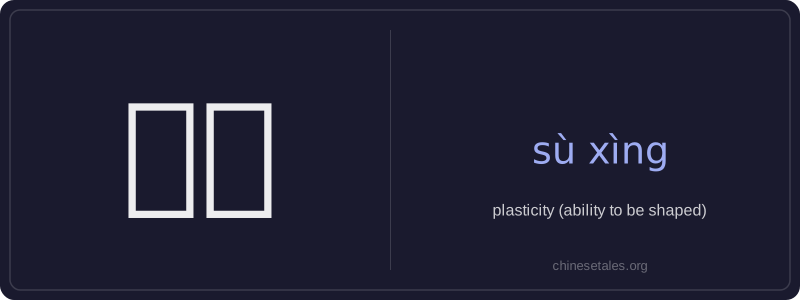
塑性 (sù xìng) is a technical noun meaning 'plasticity' — the ability of a material, tissue, or system to be permanently reshaped without breaking, especially under stress or over time. The character 塑 means 'to mold' or 'to shape', while 性 denotes 'nature' or 'property'; together, they literally mean 'the property of being moldable'. This term is widely used in materials science, engineering, and medicine — for instance, when describing how bone, cartilage, or neural pathways adapt structurally in response to repeated stimuli or injury.
In Chinese medical and rehabilitation contexts, 塑性 often appears in discussions of neuroplasticity (神经可塑性, shénjīng kě sù xìng) or tissue plasticity, emphasizing the body’s capacity for functional reorganization. It is not used for everyday objects like clay or playdough (which would use more colloquial terms like 可塑性 or simply 柔软); rather, it carries a formal, scientific register and almost always appears in compound terms or academic/professional discourse.
Example Sentences
Related Words
面条
‘面条’ (miàn tiáo) literally means ‘flour str
背后
背后 literally means 'back + behind' and functions
认同
‘认同’ (tóng rèn) is a verb meaning ‘to ident
中学
'Zhōngxué' literally combines 'zhōng' (middle)
认为
‘认为’ (rèn wéi) is a transitive verb meaning
认可
认可 (rèn kě) is a formal, transitive verb meani
无论谁
‘无论谁’ (wú lùn shéi) is a pronoun meaning
不对
不对 (bù duì) literally combines 不 (bù), meani