Word Explanation
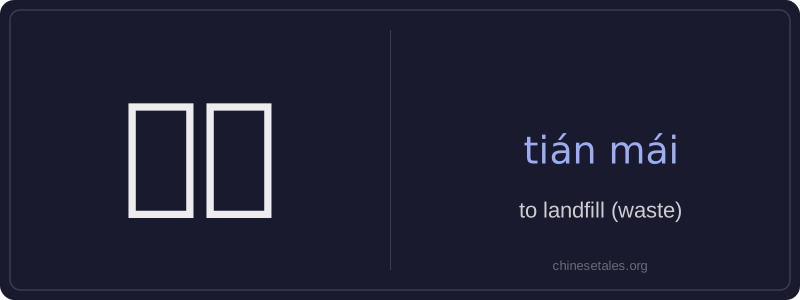
'Tián mái' literally combines 填 (tián), meaning 'to fill' or 'to pack', and 埋 (mái), meaning 'to bury' or 'to cover over'. Together, they form a verb describing the process of disposing of waste by burying it in designated landfills — typically layers of waste covered with soil or other inert material. This method is widely used for municipal solid waste, construction debris, and some industrial byproducts.
The term carries environmental and regulatory connotations: 'tián mái' often appears in discussions about waste management policy, pollution control, and sustainable development. It’s commonly paired with nouns like '垃圾' (lājī, garbage), '场' (chǎng, site), or '处理' (chǔlǐ, treatment). Unlike informal disposal methods, 'tián mái' implies an engineered, regulated process — though uncontrolled or illegal landfilling also occurs and is criticized in environmental reporting.
Example Sentences
Related Words
面条
‘面条’ (miàn tiáo) literally means ‘flour str
背后
背后 literally means 'back + behind' and functions
认同
‘认同’ (tóng rèn) is a verb meaning ‘to ident
中学
'Zhōngxué' literally combines 'zhōng' (middle)
认为
‘认为’ (rèn wéi) is a transitive verb meaning
认可
认可 (rèn kě) is a formal, transitive verb meani
无论谁
‘无论谁’ (wú lùn shéi) is a pronoun meaning
不对
不对 (bù duì) literally combines 不 (bù), meani