Word Explanation
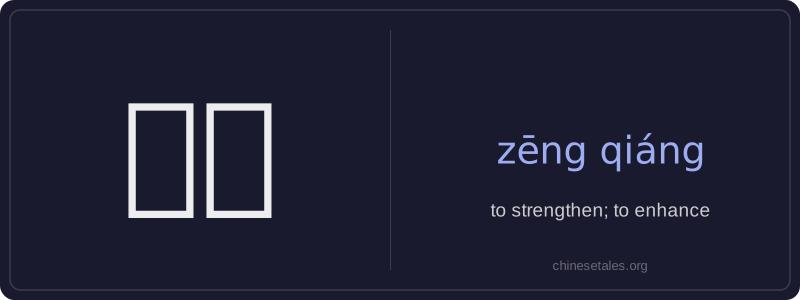
增强 is a transitive verb meaning 'to strengthen' or 'to enhance' — it describes the action of making something more powerful, effective, or resilient. The first character 增 (zēng) means 'to increase' or 'to add', while 强 (qiáng) means 'strong' or 'powerful'; together, they convey the idea of actively boosting strength or capability. It is commonly used in formal and semi-formal contexts, especially when discussing health, skills, systems, or relationships.
This word often appears with abstract nouns as its object: for example, 增强免疫力 (strengthen immunity), 增强信心 (boost confidence), or 增强合作 (enhance cooperation). It implies intentional effort and measurable improvement, not just a temporary effect. While it can occasionally modify nouns attributively (e.g., 增强效果), it functions primarily as a verb and rarely as a noun. It carries a positive, constructive connotation and is frequently seen in news reports, health advice, educational materials, and policy documents.
Example Sentences
Related Words
面条
‘面条’ (miàn tiáo) literally means ‘flour str
背后
背后 literally means 'back + behind' and functions
认同
‘认同’ (tóng rèn) is a verb meaning ‘to ident
无论谁
‘无论谁’ (wú lùn shéi) is a pronoun meaning
中学
'Zhōngxué' literally combines 'zhōng' (middle)
认为
‘认为’ (rèn wéi) is a transitive verb meaning
认可
认可 (rèn kě) is a formal, transitive verb meani
不对
不对 (bù duì) literally combines 不 (bù), meani