Word Explanation
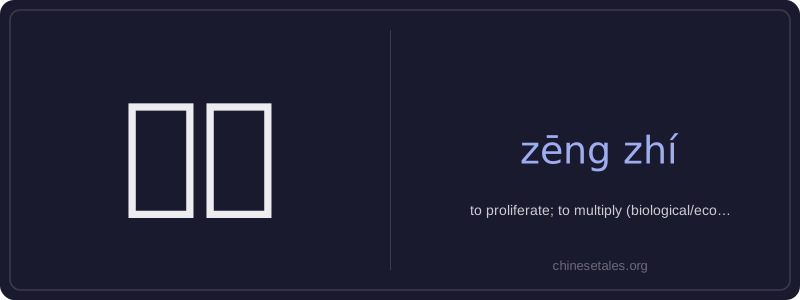
增殖 (zēng zhí) is a formal, primarily written verb meaning 'to proliferate' or 'to multiply rapidly', especially in biological or technical contexts. The first character 增 (zēng) means 'to increase' or 'to add', while 殖 (zhí) means 'to reproduce' or 'to propagate' — together they emphasize growth through replication. It is commonly used to describe the uncontrolled multiplication of cells (e.g., cancerous tissue), microorganisms (e.g., bacteria or viruses), or even economic assets (e.g., capital or data). Unlike the more general 增加 (zēngjiā, 'to increase'), 增殖 specifically implies self-replication or generative expansion.
This term appears frequently in medical reports, scientific literature, and policy discussions about public health, ecology, or biotechnology. It carries a neutral-to-slightly-negative connotation when referring to harmful proliferation (e.g., tumor growth), but can be positive in contexts like beneficial bacterial cultures or sustainable resource development. It is rarely used in casual speech and almost never with people as subjects — it applies to entities capable of self-duplication.
Example Sentences
Related Words
面条
‘面条’ (miàn tiáo) literally means ‘flour str
背后
背后 literally means 'back + behind' and functions
认同
‘认同’ (tóng rèn) is a verb meaning ‘to ident
无论谁
‘无论谁’ (wú lùn shéi) is a pronoun meaning
中学
'Zhōngxué' literally combines 'zhōng' (middle)
认为
‘认为’ (rèn wéi) is a transitive verb meaning
认可
认可 (rèn kě) is a formal, transitive verb meani
不对
不对 (bù duì) literally combines 不 (bù), meani