Word Explanation
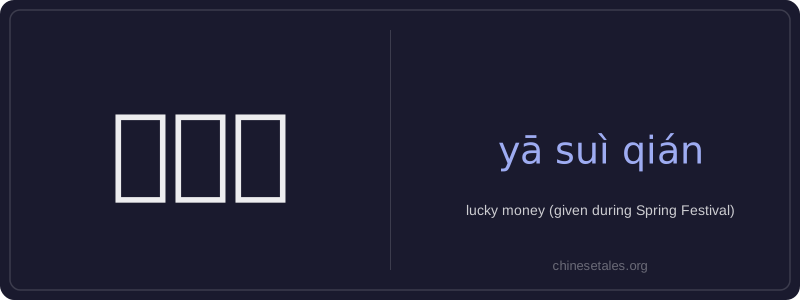
Yā suì qián (lucky money) is a traditional gift of money given to children and unmarried young adults during the Spring Festival, especially on Chinese New Year’s Eve or the first day of the Lunar New Year. The term literally breaks down as 压 (yā, 'to suppress' or 'to press down'), 岁 (suì, 'year' or 'age'), and 钱 (qián, 'money'). Together, it symbolizes 'suppressing evil spirits and bad luck for the coming year'—a protective blessing rooted in folklore where red envelopes (hóng bāo) are used to contain the money.
This custom reflects familial care and auspicious wishes for health, safety, and prosperity in the new year. The money is always placed in red envelopes because the color red wards off misfortune. While traditionally given by elders to younger family members, it may also be exchanged among close relatives and sometimes colleagues in informal settings. The amount is usually an even number (avoiding 4), with digits like 6, 8, or 9 considered especially lucky.
Example Sentences
Related Words
面条
‘面条’ (miàn tiáo) literally means ‘flour str
背后
背后 literally means 'back + behind' and functions
认同
‘认同’ (tóng rèn) is a verb meaning ‘to ident
无论谁
‘无论谁’ (wú lùn shéi) is a pronoun meaning
中学
'Zhōngxué' literally combines 'zhōng' (middle)
认为
‘认为’ (rèn wéi) is a transitive verb meaning
认可
认可 (rèn kě) is a formal, transitive verb meani
不对
不对 (bù duì) literally combines 不 (bù), meani