Word Explanation
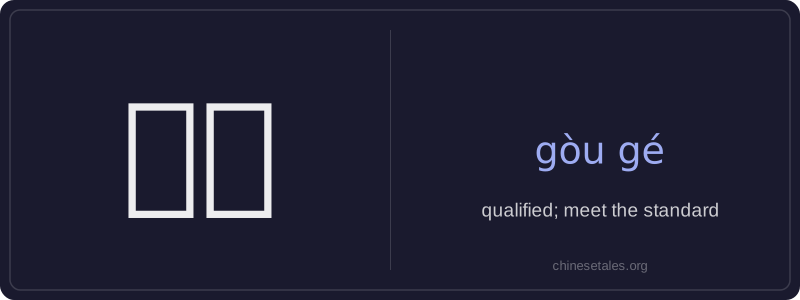
够格 (gòu gé) is an adjective meaning 'qualified' or 'meeting the required standard.' Literally, 够 means 'to reach' or 'to be sufficient,' and 格 means 'standard,' 'criterion,' or 'level'—often used in formal or evaluative contexts. Together, they convey that someone or something satisfies a specific threshold, whether for a job, admission, award, or social expectation.
This term is commonly used in spoken and written Chinese when assessing eligibility—such as for employment, school enrollment, or professional certification. It carries a neutral-to-formal register and often implies an external benchmark rather than personal preference. While it can describe people ('He’s not够格 for this role'), it’s also applied to objects or performances ('This proposal isn’t够格 for funding'). It’s rarely used with measure words and typically appears after the subject or in predicate position after 是 or 很.
Example Sentences
Related Words
面条
‘面条’ (miàn tiáo) literally means ‘flour str
背后
背后 literally means 'back + behind' and functions
认同
‘认同’ (tóng rèn) is a verb meaning ‘to ident
无论谁
‘无论谁’ (wú lùn shéi) is a pronoun meaning
中学
'Zhōngxué' literally combines 'zhōng' (middle)
认为
‘认为’ (rèn wéi) is a transitive verb meaning
认可
认可 (rèn kě) is a formal, transitive verb meani
不对
不对 (bù duì) literally combines 不 (bù), meani