Word Explanation
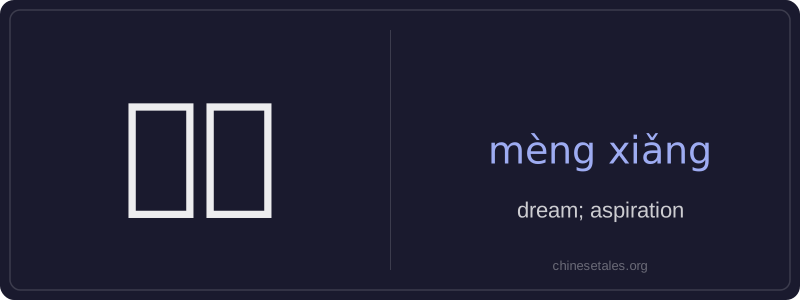
梦想 (mèng xiǎng) literally combines 梦 (mèng, 'dream') and 想 (xiǎng, 'to think' or 'to imagine'), forming a noun meaning a deeply held personal aspiration — not just a sleeping dream, but a cherished life goal or ideal. It carries emotional weight and often implies passion, hope, and long-term commitment, such as wanting to become a doctor, start a business, or protect the environment.
This word is commonly used in motivational, educational, and personal development contexts — for example, when discussing childhood ambitions, career planning, or social change. Unlike the neutral term 目标 (mùbiāo, 'goal'), 梦想 emphasizes heartfelt desire and emotional significance. It’s frequently paired with verbs like 追求 (zhuīqiú, 'to pursue'), 实现 (shíxiàn, 'to realize'), or 坚持 (jiānchí, 'to persist in'). While it can be used in both formal and informal speech, it rarely appears in technical or bureaucratic writing.
Example Sentences
Related Words
面条
‘面条’ (miàn tiáo) literally means ‘flour str
背后
背后 literally means 'back + behind' and functions
认同
‘认同’ (tóng rèn) is a verb meaning ‘to ident
无论谁
‘无论谁’ (wú lùn shéi) is a pronoun meaning
中学
'Zhōngxué' literally combines 'zhōng' (middle)
认为
‘认为’ (rèn wéi) is a transitive verb meaning
认可
认可 (rèn kě) is a formal, transitive verb meani
不对
不对 (bù duì) literally combines 不 (bù), meani