Word Explanation
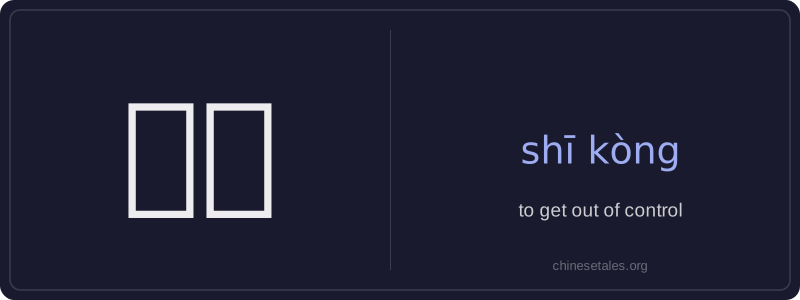
失控 (shī kòng) literally means 'to lose control' — 失 (shī) means 'to lose' or 'to miss', and 控 (kòng) means 'to control' or 'to manage'. Together, they form a verb describing a sudden or rapid loss of regulation, restraint, or command over a situation, system, person, or animal. It often implies an abrupt shift from order to chaos, especially when external forces or internal instability overwhelm normal functioning.
This word is commonly used in contexts involving machinery, vehicles, emotions, crowds, and animals — for instance, when a dog breaks free from its leash and runs wildly, or when a driver loses steering control on icy roads. While it can describe physical events, it’s also frequently used metaphorically: a meeting may 'go out of control' due to heated arguments, or a child's tantrum may cause a parent to feel emotionally 'out of control'. It carries a slightly negative, urgent connotation and is rarely used in casual, lighthearted settings.
Example Sentences
Related Words
面条
‘面条’ (miàn tiáo) literally means ‘flour str
背后
背后 literally means 'back + behind' and functions
认同
‘认同’ (tóng rèn) is a verb meaning ‘to ident
无论谁
‘无论谁’ (wú lùn shéi) is a pronoun meaning
中学
'Zhōngxué' literally combines 'zhōng' (middle)
认为
‘认为’ (rèn wéi) is a transitive verb meaning
认可
认可 (rèn kě) is a formal, transitive verb meani
不对
不对 (bù duì) literally combines 不 (bù), meani