Word Explanation
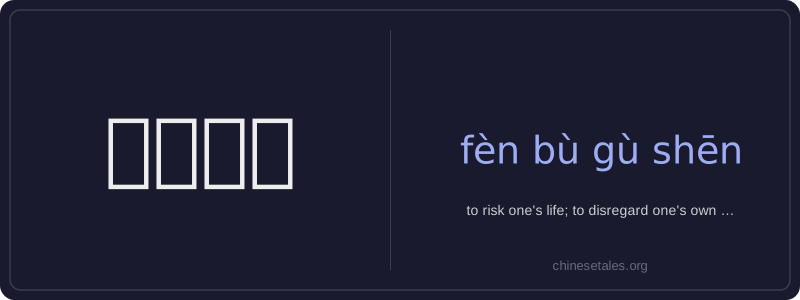
‘奋不顾身’ is a four-character idiom meaning to act with such courage and determination that one completely disregards personal safety—even risking one’s life. Literally, 奋 (fèn) means ‘to exert oneself vigorously,’ 不 (bù) is the negation ‘not,’ 顾 (gù) means ‘to attend to’ or ‘to care about,’ and 身 (shēn) means ‘body’ or ‘self.’ Together, they convey the idea of ‘exerting oneself without caring for one’s own body.’
This expression is highly formal and heroic in tone, commonly used in written Chinese, news reports, historical narratives, or speeches praising selfless bravery—especially in emergencies like rescues, firefighting, or wartime actions. It emphasizes moral conviction and sacrifice, not recklessness; the subject is always acting for a noble cause or to protect others.
Example Sentences
Related Words
面条
‘面条’ (miàn tiáo) literally means ‘flour str
背后
背后 literally means 'back + behind' and functions
认同
‘认同’ (tóng rèn) is a verb meaning ‘to ident
无论谁
‘无论谁’ (wú lùn shéi) is a pronoun meaning
中学
'Zhōngxué' literally combines 'zhōng' (middle)
认为
‘认为’ (rèn wéi) is a transitive verb meaning
认可
认可 (rèn kě) is a formal, transitive verb meani
不对
不对 (bù duì) literally combines 不 (bù), meani