Word Explanation
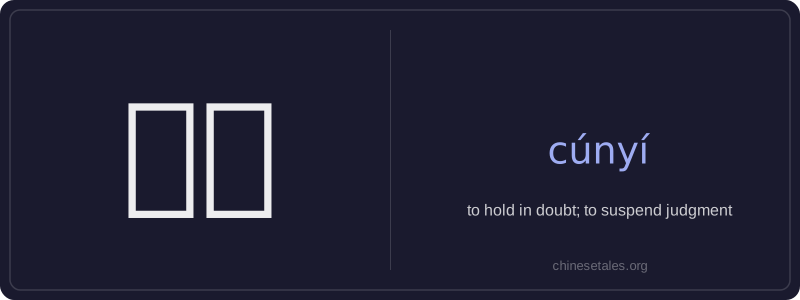
存疑 is a formal, written verb meaning 'to hold in doubt' or 'to suspend judgment' — literally combining 存 (cún, 'to retain, to keep') and 疑 (yí, 'doubt, suspicion'). Together, they express the active mental stance of deliberately withholding acceptance or conclusion due to insufficient evidence or uncertainty. It implies thoughtful caution rather than mere ignorance or disbelief.
This term is commonly used in academic, legal, journalistic, and analytical contexts — for example, when scholars question a historical claim, judges reserve judgment on contested evidence, or editors flag unverified facts in a report. It carries a neutral-to-cautious tone and is rarely used in casual speech; native speakers typically say 怀疑 (huáiyí) or 不确定 (bù quèdìng) in everyday conversation. 存疑 emphasizes intellectual responsibility: retaining doubt as a provisional, reasoned position pending further verification.
Example Sentences
Related Words
面条
‘面条’ (miàn tiáo) literally means ‘flour str
背后
背后 literally means 'back + behind' and functions
认同
‘认同’ (tóng rèn) is a verb meaning ‘to ident
无论谁
‘无论谁’ (wú lùn shéi) is a pronoun meaning
中学
'Zhōngxué' literally combines 'zhōng' (middle)
认为
‘认为’ (rèn wéi) is a transitive verb meaning
认可
认可 (rèn kě) is a formal, transitive verb meani
不对
不对 (bù duì) literally combines 不 (bù), meani