Word Explanation
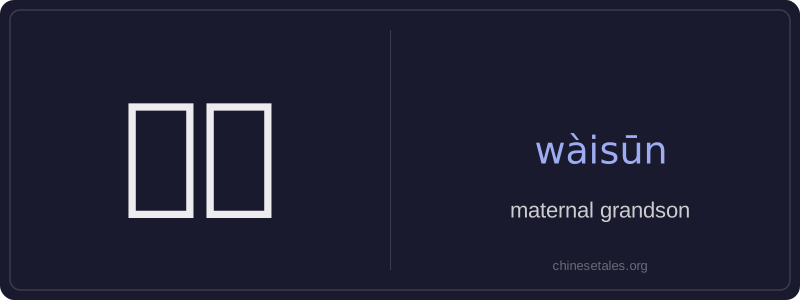
‘Wàisūn’ (外孙) literally means 'outside grandson' — the character 外 (wài) indicates 'outside' or 'maternal', while 孙 (sūn) means 'grandson'. It specifically refers to the grandson of one’s daughter, i.e., the son of one’s daughter. This term reflects traditional Chinese kinship distinctions that differentiate between paternal and maternal lineages: a grandson through one’s son is called 孙子 (sūnzi), whereas a grandson through one’s daughter is 外孙.
The prefix 外 signals the maternal side of the family — it does not imply distance or lesser importance, but rather denotes lineage direction. In daily conversation, 外孙 is used respectfully and affectionately, often in contexts involving caregiving, inheritance discussions, or family gatherings. It is common in both spoken and written Mandarin, especially when clarifying family relationships in formal documents or intergenerational conversations.
Example Sentences
Related Words
面条
‘面条’ (miàn tiáo) literally means ‘flour str
背后
背后 literally means 'back + behind' and functions
认同
‘认同’ (tóng rèn) is a verb meaning ‘to ident
无论谁
‘无论谁’ (wú lùn shéi) is a pronoun meaning
中学
'Zhōngxué' literally combines 'zhōng' (middle)
认为
‘认为’ (rèn wéi) is a transitive verb meaning
认可
认可 (rèn kě) is a formal, transitive verb meani
不对
不对 (bù duì) literally combines 不 (bù), meani