Word Explanation
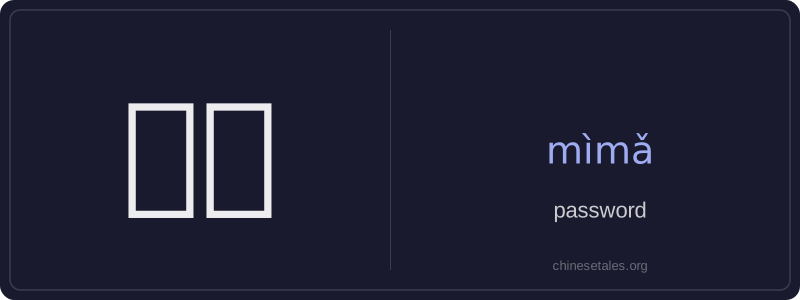
密碼 (mìmǎ) literally combines 密 (mì), meaning 'secret' or 'confidential', and 碼 (mǎ), meaning 'code' or 'cipher'. Together, they form the standard modern Chinese term for 'password' — a secret string of characters used to verify identity or grant access to digital accounts, devices, or secure systems. It is widely used in computing, banking, and online services, and carries no classical or literary connotation; it is a purely functional, contemporary compound.
The word appears in both formal and casual contexts — from login screens and security settings to everyday conversations about account recovery or app setup. Unlike some English synonyms (e.g., 'passphrase'), 密碼 always refers to a concise, often alphanumeric sequence, not a full sentence. It is never used metaphorically for personal secrets outside the realm of authentication, and does not imply encryption algorithms themselves — only the user-supplied key.
Example Sentences
Related Words
面条
‘面条’ (miàn tiáo) literally means ‘flour str
背后
背后 literally means 'back + behind' and functions
认同
‘认同’ (tóng rèn) is a verb meaning ‘to ident
无论谁
‘无论谁’ (wú lùn shéi) is a pronoun meaning
中学
'Zhōngxué' literally combines 'zhōng' (middle)
认为
‘认为’ (rèn wéi) is a transitive verb meaning
认可
认可 (rèn kě) is a formal, transitive verb meani
不对
不对 (bù duì) literally combines 不 (bù), meani