Word Explanation
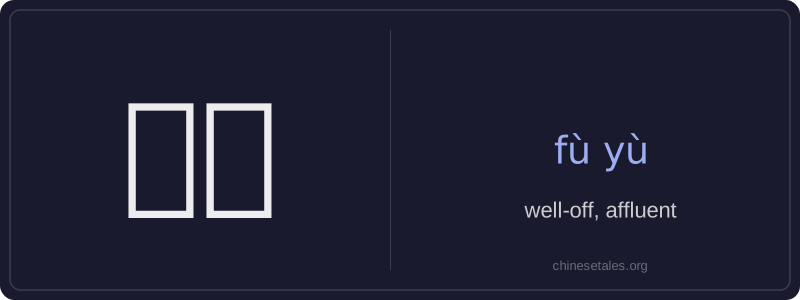
富裕 (fù yù) is an adjective meaning 'well-off' or 'affluent', describing a person, family, or region with abundant financial resources and material comfort. The character 富 (fù) means 'rich' or 'wealthy', while 裕 (yù) conveys 'abundance', 'plenty', or 'ample room' — together they emphasize not just wealth but stable, comfortable prosperity. Unlike colloquial terms like 有钱 (yǒu qián, 'having money'), 富裕 carries a more formal, positive, and socially respectful tone, often implying long-term security and modest dignity rather than flashy luxury.
This word is commonly used in socioeconomic discussions, news reports, policy documents, and everyday comparisons of living standards — for example, when describing regional development gaps (e.g., coastal vs. inland areas) or family circumstances in conversations about education or housing. It frequently appears in fixed phrases like 富裕家庭 (fùyù jiātíng, 'affluent family') or 富裕地区 (fùyù dìqū, 'prosperous region'). It is rarely used to describe individuals alone without context (e.g., *他很富裕 is grammatical but sounds vague; adding a noun like 他家很富裕 is more natural).
Example Sentences
Related Words
面条
‘面条’ (miàn tiáo) literally means ‘flour str
背后
背后 literally means 'back + behind' and functions
认同
‘认同’ (tóng rèn) is a verb meaning ‘to ident
无论谁
‘无论谁’ (wú lùn shéi) is a pronoun meaning
中学
'Zhōngxué' literally combines 'zhōng' (middle)
认为
‘认为’ (rèn wéi) is a transitive verb meaning
认可
认可 (rèn kě) is a formal, transitive verb meani
不对
不对 (bù duì) literally combines 不 (bù), meani