Word Explanation
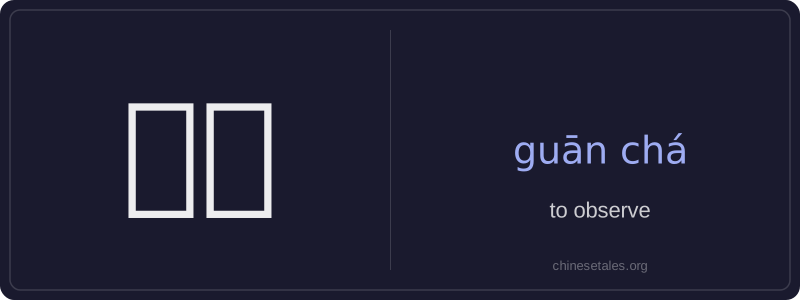
观察 (guān chá) is a verb meaning 'to observe' — to watch something carefully and attentively, often to gather information or detect patterns. The character 观 (guān) means 'to look at' or 'to view', while 察 (chá) adds the nuance of 'examining closely' or 'investigating thoroughly'. Together, they form a compound that emphasizes deliberate, focused attention rather than casual looking. It’s commonly used in scientific, educational, and everyday contexts — for example, when studying animal behavior, monitoring changes in weather, or analyzing people’s reactions.
This word implies an active, thoughtful process: it’s not just seeing, but interpreting what you see. It frequently appears in formal writing, textbooks, and research settings, though it’s also natural in spoken Chinese when describing careful watching — such as observing a bird building its nest or noticing subtle shifts in someone’s mood. Unlike simpler verbs like 看 (kàn), 观察 suggests purpose, patience, and analytical intent.
Example Sentences
Related Words
面条
‘面条’ (miàn tiáo) literally means ‘flour str
背后
背后 literally means 'back + behind' and functions
认同
‘认同’ (tóng rèn) is a verb meaning ‘to ident
无论谁
‘无论谁’ (wú lùn shéi) is a pronoun meaning
中学
'Zhōngxué' literally combines 'zhōng' (middle)
认为
‘认为’ (rèn wéi) is a transitive verb meaning
认可
认可 (rèn kě) is a formal, transitive verb meani
不对
不对 (bù duì) literally combines 不 (bù), meani