Word Explanation
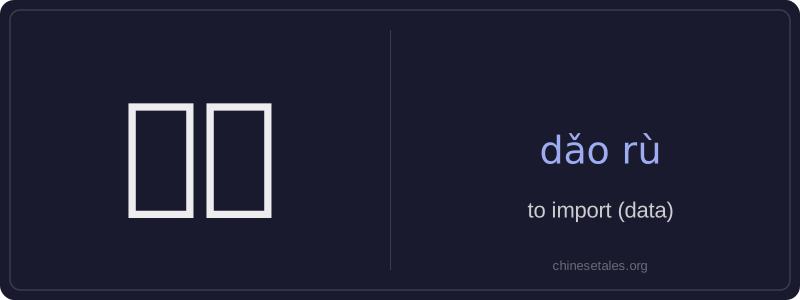
导入 (dǎo rù) is a verb meaning 'to import'—specifically, to bring external data, files, or content into a software application, system, or document. The character 导 (dǎo) means 'to guide' or 'to lead', and 入 (rù) means 'to enter' or 'to go into'. Together, they literally convey the idea of 'guiding something into' a digital environment. This term is widely used in computing, data analysis, office software (like Excel or Word), and educational platforms.
It contrasts with 导出 (dǎo chū, 'to export'), which moves data out. While 导入 can occasionally appear in non-technical contexts (e.g., importing ideas or methods), its overwhelming usage is technical and formal. Learners should note that it’s almost always transitive—it requires a direct object (e.g., 导入文件, 导入数据) and commonly appears in commands, menus, or instructional language.
Example Sentences
Related Words
面条
‘面条’ (miàn tiáo) literally means ‘flour str
背后
背后 literally means 'back + behind' and functions
认同
‘认同’ (tóng rèn) is a verb meaning ‘to ident
无论谁
‘无论谁’ (wú lùn shéi) is a pronoun meaning
中学
'Zhōngxué' literally combines 'zhōng' (middle)
认为
‘认为’ (rèn wéi) is a transitive verb meaning
认可
认可 (rèn kě) is a formal, transitive verb meani
不对
不对 (bù duì) literally combines 不 (bù), meani