Word Explanation
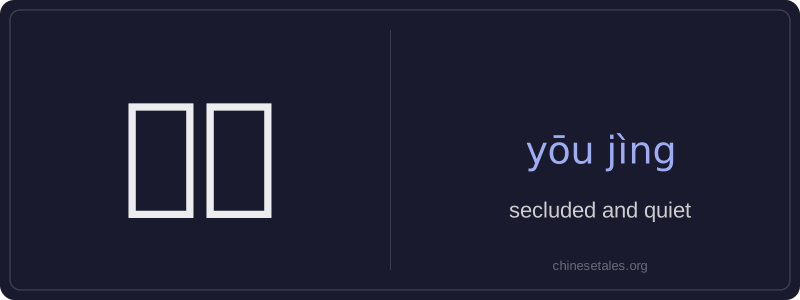
幽静 (yōu jìng) is an adjective meaning 'secluded and quiet' — it evokes a deep, peaceful stillness, often with a sense of natural beauty or gentle remoteness. The first character 幽 (yōu) suggests depth, seclusion, or mystery — like a hidden valley or shaded grove — while 静 (jìng) means 'quiet', 'calm', or 'still'. Together, they describe not just absence of noise, but a serene, undisturbed atmosphere that feels intentionally sheltered from the bustle of daily life.
This word is commonly used to describe natural settings — mountain trails, temple courtyards, bamboo forests, or lakeside gardens — where quietness feels intentional and restorative. It carries a poetic, slightly literary tone and appears frequently in descriptive writing, travel essays, and classical-inspired speech. Unlike simple words for 'quiet' like 安静 (ān jìng), 幽静 implies aesthetic harmony and emotional tranquility, making it unsuitable for describing silence due to tension or emptiness.
Example Sentences
Related Words
面条
‘面条’ (miàn tiáo) literally means ‘flour str
背后
背后 literally means 'back + behind' and functions
认同
‘认同’ (tóng rèn) is a verb meaning ‘to ident
无论谁
‘无论谁’ (wú lùn shéi) is a pronoun meaning
中学
'Zhōngxué' literally combines 'zhōng' (middle)
外语
‘外语’ literally means ‘outside language’ —
认为
‘认为’ (rèn wéi) is a transitive verb meaning
认可
认可 (rèn kě) is a formal, transitive verb meani