Word Explanation
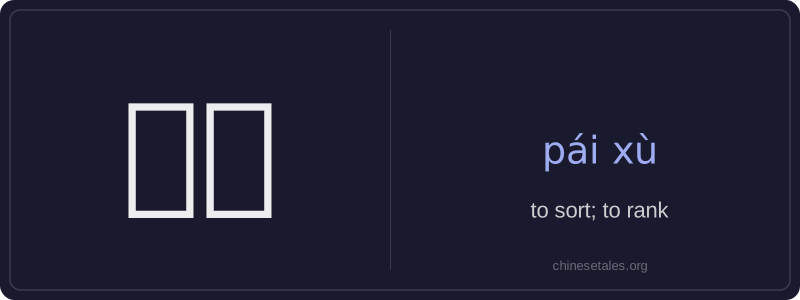
排序 means 'to sort' or 'to rank'—arranging items in a specific order, such as ascending, descending, alphabetical, chronological, or by priority. The character 排 (pái) means 'to line up' or 'to arrange', while 序 (xù) means 'order' or 'sequence'; together, they literally convey 'arranging into order'. This term is widely used in both everyday and technical contexts: organizing lists, ranking search results, sorting data in spreadsheets, or arranging students by height or test scores.
It functions primarily as a verb and commonly appears in compound verbs like 排序算法 (sorting algorithm), 按...排序 (to sort by...), or with aspect markers like 正在排序 (sorting now) or 已经排序 (already sorted). Though it can occasionally function as a noun (e.g., 数据排序), its verbal use dominates. Unlike the more colloquial 排队 (to queue), 排序 implies logical or systematic arrangement rather than physical waiting.
Example Sentences
Related Words
面条
‘面条’ (miàn tiáo) literally means ‘flour str
背后
背后 literally means 'back + behind' and functions
认同
‘认同’ (tóng rèn) is a verb meaning ‘to ident
无论谁
‘无论谁’ (wú lùn shéi) is a pronoun meaning
中学
'Zhōngxué' literally combines 'zhōng' (middle)
外语
‘外语’ literally means ‘outside language’ —
认为
‘认为’ (rèn wéi) is a transitive verb meaning
认可
认可 (rèn kě) is a formal, transitive verb meani