Word Explanation
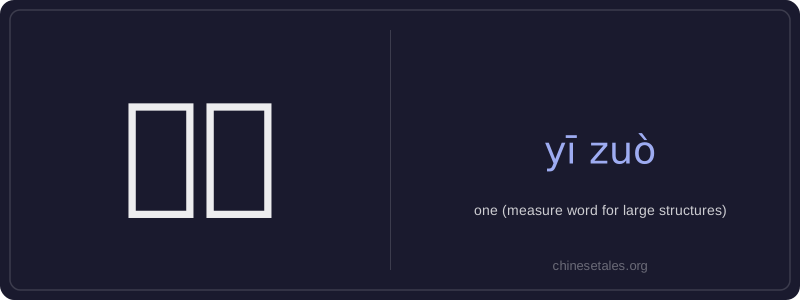
'一座' (yī zuò) is a numeral-measure word compound meaning 'one' specifically when counting large, fixed structures—especially buildings, mountains, bridges, temples, or towers. The first character, 一 (yī), is the basic numeral 'one'; the second, 座 (zuò), is a measure word that conveys stability, verticality, and permanence—it implies something substantial and immovable, rooted in the ground. Unlike generic measure words like 个 (gè), 座 carries strong spatial and architectural connotations.
This phrase appears frequently in descriptions of scenery, urban environments, and travel narratives. It’s used before nouns like 山 (shān, mountain), 桥 (qiáo, bridge), 寺庙 (sìmiào, temple), or 大楼 (dàlóu, high-rise building). Note that 座 is never used for people, vehicles, or small objects—doing so would sound unnatural or even humorous. Learners should memorize it as a fixed pairing: yī + zuò + [large structure noun].
Example Sentences
Related Words
面条
‘面条’ (miàn tiáo) literally means ‘flour str
背后
背后 literally means 'back + behind' and functions
认同
‘认同’ (tóng rèn) is a verb meaning ‘to ident
无论谁
‘无论谁’ (wú lùn shéi) is a pronoun meaning
中学
'Zhōngxué' literally combines 'zhōng' (middle)
外语
‘外语’ literally means ‘outside language’ —
认为
‘认为’ (rèn wéi) is a transitive verb meaning
认可
认可 (rèn kě) is a formal, transitive verb meani