Word Explanation
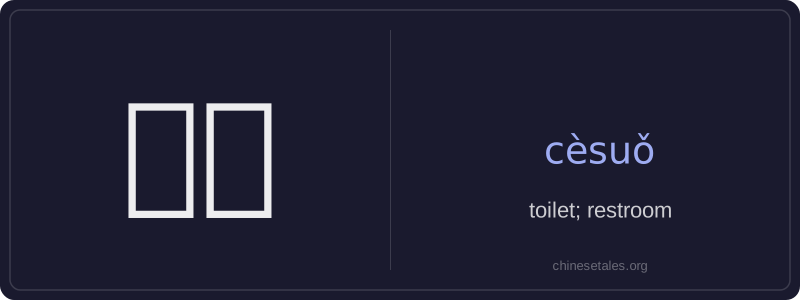
厕所 (cèsuǒ) literally combines 厕 (cè), an ancient character meaning 'latrine' or 'toilet area', and 所 (suǒ), a common noun suffix meaning 'place' or 'location'. Together, they form a standard, neutral term for 'toilet' or 'restroom' — the most widely understood and appropriate word in everyday Mandarin for this facility. It is used in both public and private settings, from homes and offices to train stations and parks.
The term is formal enough for polite conversation but not overly stiff; it’s preferred over slang like 马桶 (mǎtǒng, 'toilet bowl') or informal terms like WC in most contexts. Unlike English 'bathroom', 厕所 rarely implies bathing — it refers specifically to the space for bodily elimination. In China, signs often read 厕所 or use pictograms, and directional phrases like '去厕所' (qù cèsuǒ, 'go to the toilet') are universally clear and socially acceptable.
Example Sentences
Related Words
面条
‘面条’ (miàn tiáo) literally means ‘flour str
背后
背后 literally means 'back + behind' and functions
认同
‘认同’ (tóng rèn) is a verb meaning ‘to ident
无论谁
‘无论谁’ (wú lùn shéi) is a pronoun meaning
中学
'Zhōngxué' literally combines 'zhōng' (middle)
外语
‘外语’ literally means ‘outside language’ —
认为
‘认为’ (rèn wéi) is a transitive verb meaning
认可
认可 (rèn kě) is a formal, transitive verb meani