Word Explanation
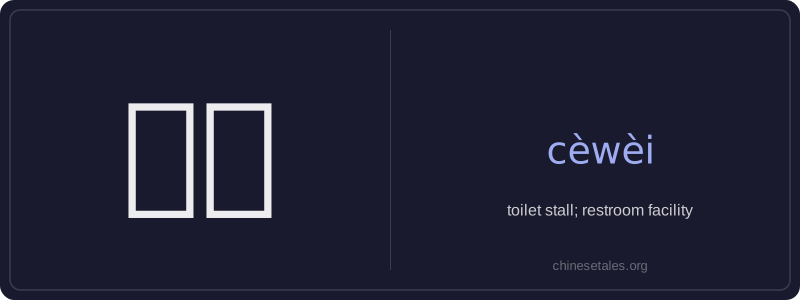
'厕位' literally combines '厕' (cè), meaning 'toilet' or 'lavatory', and '位' (wèi), meaning 'position', 'spot', or 'space'. Together, it refers specifically to a designated individual stall or cubicle in a public or shared restroom — not the entire bathroom, but one functional unit with a door, toilet, and sometimes sink. It's a neutral, formal term commonly used in signage, facility management, urban planning, and official announcements.
The word emphasizes capacity and spatial allocation: for example, a building might be required to provide a minimum number of '厕位' per hundred occupants. It's frequently seen on maps, apps (e.g., '查找附近厕位'), and accessibility reports. Unlike colloquial terms like '厕所' (toilet room) or '茅坑' (slang), '厕位' focuses on infrastructure and availability — making it especially common in municipal contexts, transportation hubs, and inclusive design discussions.
Example Sentences
Related Words
面条
‘面条’ (miàn tiáo) literally means ‘flour str
背后
背后 literally means 'back + behind' and functions
认同
‘认同’ (tóng rèn) is a verb meaning ‘to ident
无论谁
‘无论谁’ (wú lùn shéi) is a pronoun meaning
中学
'Zhōngxué' literally combines 'zhōng' (middle)
外语
‘外语’ literally means ‘outside language’ —
认为
‘认为’ (rèn wéi) is a transitive verb meaning
认可
认可 (rèn kě) is a formal, transitive verb meani